Luxe Pianos · Designer Resource
What every interior designer, architect, and project planner should know before specifying a player piano for a luxury residence, yacht, hotel, or commercial space.
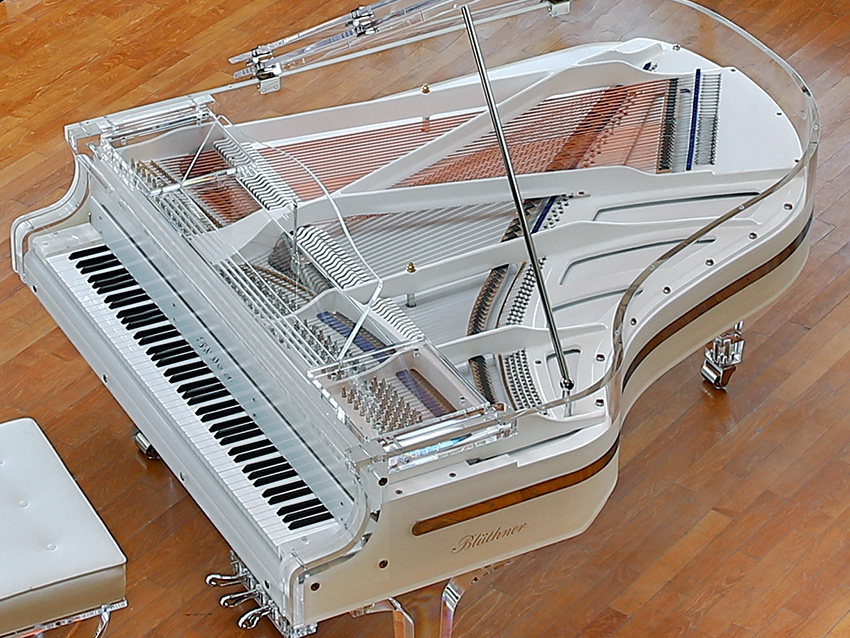
An Unforgettable Design
There is a particular quality shared by the world’s most memorable luxury spaces. A quality that guests struggle to name but never forget. It is not simply visual; it is experiential. It is the feeling that the space itself is alive.
Few things create that feeling more powerfully than live acoustic piano music. Not background audio, not a playlist through a speaker system, but real keys moving on a real instrument. A room is filled with warm, resonant sound. The kind of music that changes the atmosphere of a gathering without anyone acknowledging it.
Timeless Statement
For designers specifying luxury residences, superyachts, hotels, and private clubs, a self-playing piano is one of the most powerful ambient amenities available. It requires no performer, no scheduling, and no staff. The right instrument with the right technology is indistinguishable from a live performance.
This guide covers what designers need to know. Specifically, how these systems work, what to look for when selecting one, how they serve different project types, and what the highest expression of this category looks like.
The finest spaces are remembered not for how they look, but for how they feel. Live acoustic piano music is one of the most powerful tools available for shaping that feeling.
How a Modern Player Piano System Works
The self-playing piano has evolved far beyond its mechanical origins. Today’s systems are precision engineered. They are entirely wireless, app-controlled, and capable of reproducing performances. There is a level of nuance and dynamic range that earlier technology could not approach.
At the core of a modern player system are solenoids: components positioned beneath each key that activate with computer-controlled precision, reproducing the velocity, timing, and touch weight of a recorded performance. The result is not mechanical playback. It is a faithful reproduction of how a pianist actually plays. This precision is analogous to the full dynamic spectrum of the acoustic instrument, from the quietest pianissimo to full concert-level expression.
Traditional craftsmanship in perfect harmony with modern technology.
Control is entirely wireless. Current systems integrate with smartphones, tablets, voice assistants, and whole-home audio platforms. Content libraries contain thousands of titles spanning classical, jazz, contemporary, and popular repertoire, recorded directly from world-class artists. Scheduling, remote management, and integration with existing AV infrastructure are all standard features in the best systems.
Critically, nothing about the instrument’s appearance is compromised. Therefore, when a player system is factory-installed in a piano prior to delivery, the hardware is not visible, has no retrofitted cabinetry, and no alteration to the instrument’s finish or silhouette. The piano looks exactly as it should because it is exactly what it appears to be.
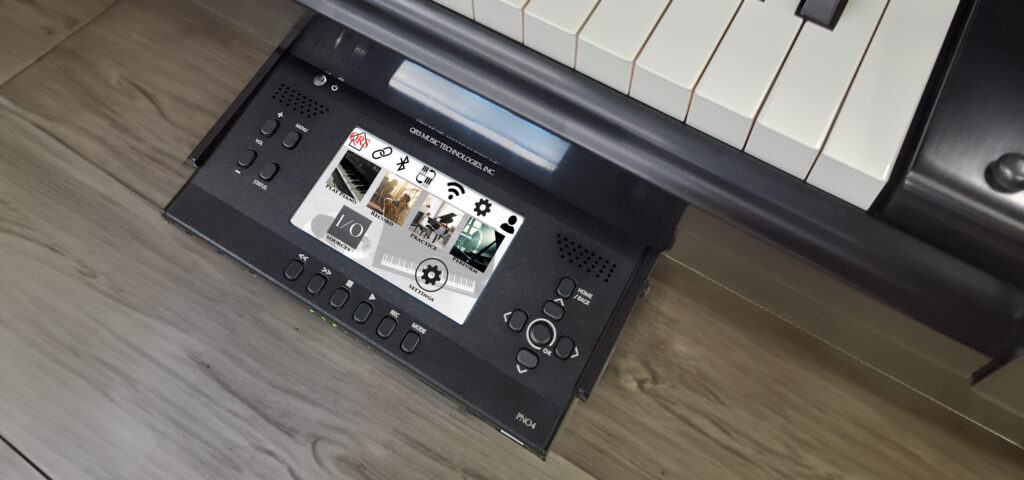
What Distinguishes a Well-Specified Player System
Not all player systems are equal, and for a luxury specification the distinctions matter. When evaluating a system for a project, designers should consider the following.
- Factory installation vs. retrofit. A system installed at the factory — before the piano is delivered — is integrated into the instrument rather than added to it. This produces better calibration, a cleaner aesthetic, and no on-site installation complexity.
- Dynamic range and performance fidelity. The best systems use advanced solenoids and high-definition MIDI to reproduce the full dynamic and expressive range of a live performance. Lesser systems produce a noticeably mechanical quality that undermines the experience.
- Content library depth and curation. The quality and breadth of available repertoire determines how useful the system is in practice. A library of thousands of professionally recorded titles — spanning multiple genres — gives a project team the flexibility to match music to any atmosphere or occasion.
- Wireless and smart home integration. The system should integrate cleanly with the project’s existing technology infrastructure: WiFi, whole-home audio, voice assistant, and scheduling platforms.
- Instrument platform quality. The player system is only as good as the instrument it lives in. A fine acoustic piano will produce a deeply different result than a mid-market instrument, regardless of the technology installed.
- Remote management capability. For hospitality and commercial projects, the ability to manage, schedule, and update content remotely is a meaningful operational advantage.
Project Types and How They Benefit
Private Residences
For clients who entertain, the player system transforms the piano from a furnishing into the centerpiece of every gathering. It performs during cocktail hour, dinner, and quiet evenings — with no musician and no effort from the host. For clients who play, it serves as an inspiring companion and practice tool.
Superyachts
On a yacht, every element earns its place. A self-playing piano delivers live acoustic ambiance in the salon or sky lounge without crew involvement. Wireless operation, smart home integration, and compact installation requirements make it a natural fit for marine environments.
Hospitality & Private Clubs
For hotels, restaurants, and private members’ clubs, a self-playing piano creates a consistent, curated atmosphere from the moment a guest arrives. Scheduling, remote management, and deep content libraries mean the right music is always playing — without operational overhead.
Show Houses & Showrooms
In a designer showhouse or luxury retail environment, a performing piano adds an experiential dimension that photography and staging alone cannot achieve. It invites guests to stay longer and creates an atmosphere that elevates every other element in the room.
Specifying for the Room
A self-playing piano is still a piano, and all the standard guidance on placement applies — with a few additional considerations specific to player system use.
Acoustic environment. The player system performs continuously, often during gatherings where conversation is also present. Hard surfaces, glass, and minimal soft furnishings can create a brightness or reflectivity that works against the experience. Rugs, upholstery, and drapery all contribute to a more balanced result. This is best planned alongside the instrument specification, not after it.
Climate stability. A piano that performs regularly needs a stable environment. Standard guidance applies: avoid direct sunlight, HVAC airflow, and humidity extremes. For marine and yacht installations, materials should be specified accordingly — some instruments are available with marine-grade finishes and hardware for exactly this context.
Connectivity. Confirm WiFi coverage at the piano’s intended location, and verify compatibility with the project’s AV and smart home infrastructure during the specification stage. For commercial and hospitality projects, network access for remote management should be planned early.
Visibility and composition. A self-playing piano performs. That means the experience of watching it matters — the movement of the keys, the openness of the lid, the relationship between instrument and listener. Placement should consider sightlines from primary seating areas, not just floor plan efficiency.
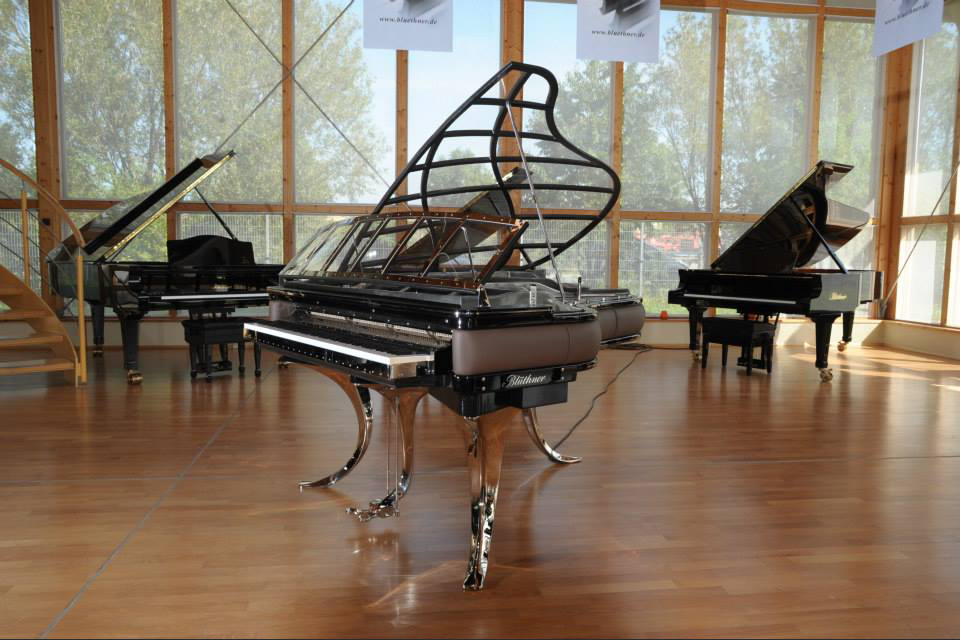
A self-playing piano specification should consider sightlines, not just floor plan efficiency. The experience of watching a piano perform is part of what makes it memorable.
The Blüthner Crystal with QRS PNOmation:
The Ultimate Expression of This Category
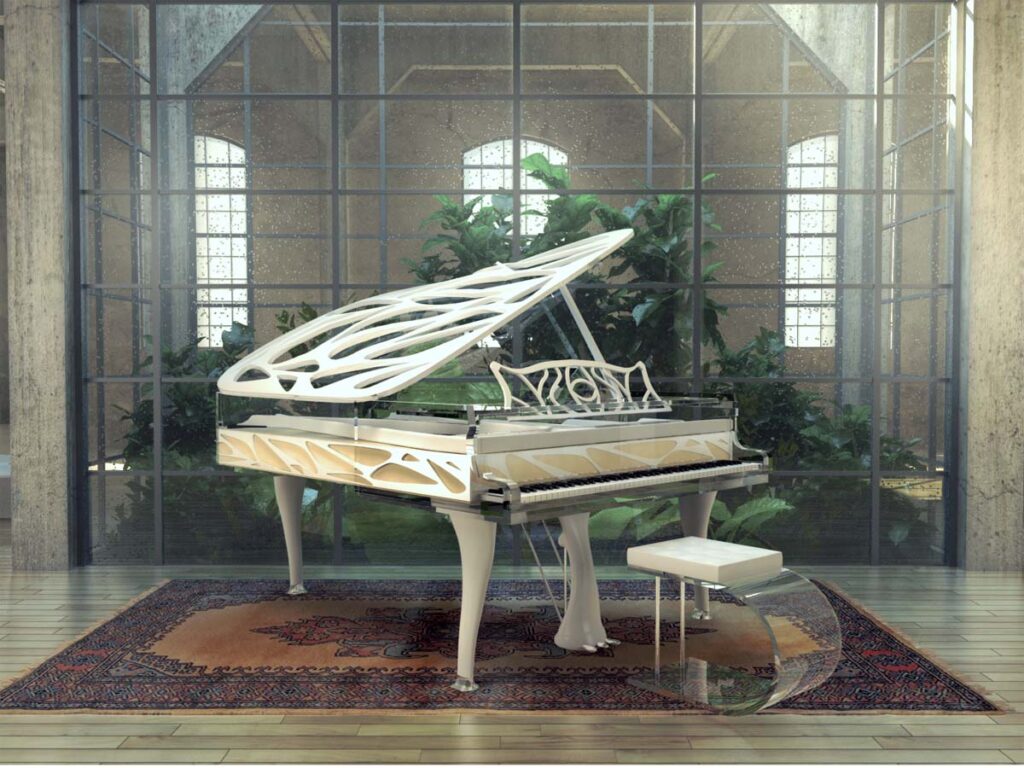
Every element discussed in this guide reaches its highest expression in a single instrument: the Blüthner Crystal grand piano with a factory-installed QRS PNOmation.
The Blüthner Crystal is not simply a piano with a transparent case. It is a complete reimagining of what a grand piano can be — designed in Leipzig, Germany, by the same family firm that has been building world-class instruments since 1853, and engineered from the ground up to function as both a performance instrument and a sculptural object of the first order.
Craft a Bespoke Masterpiece
The Crystal Edition holds the heart of a world-class Blüthner grand piano in a luminous, crystal-clear case, achieving a perception of weightless suspension. All wooden case structures with the exception of the soundboard are replaced with crystal-clear acrylic — reengineered so that the instrument retains its full acoustic integrity while presenting an appearance that is unlike anything else in a luxury interior.
Inside that transparent case lives one of the most musically distinguished instruments in the world. Blüthner’s patented Aliquot stringing system adds a fourth sympathetic string to the upper registers, producing the warm, velvety resonance that has distinguished Blüthner pianos in concert halls and private collections alike. Behind the acrylic shell lies a traditional instrument handcrafted to the highest standards, producing a rich, warm and colourful sound which has inspired composers and musicians for centuries.
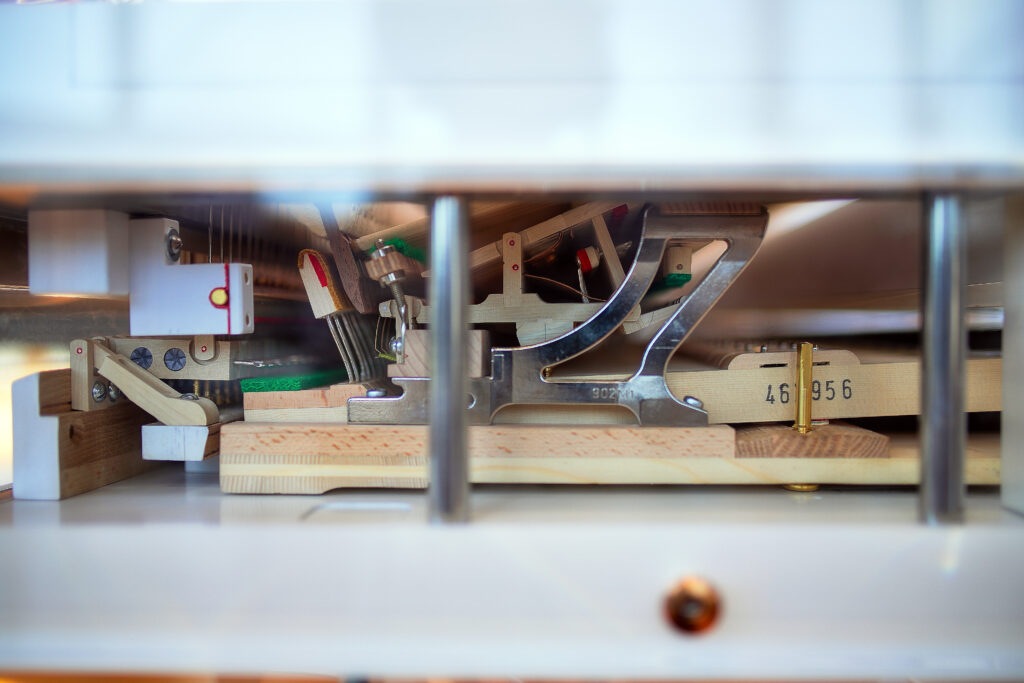
The Crystal is available in multiple configurations. Each Blüthner Crystal Edition piano is made bespoke to order, with options ranging from fully transparent to semi-transparent with painted or polished inner structures, LED illumination, custom color selections, and specialty finishes including marine-grade materials for yacht installation. A comprehensive 5-year warranty and a 30-year warranty on the acrylic case clarity and/or color change underscores the manufacturer’s commitment to the exceptional quality of its luxury pianos.
When QRS PNOmation is factory-installed in a Blüthner Crystal, the result is something genuinely rare: an instrument of the highest musical quality, in the most architecturally dramatic form available, capable of performing live at any hour without a pianist. It is a specification that no other combination of instrument and technology can replicate.
| CONSIDERATION | STANDARD LUXURY GRAND | BLUTHNER CRYSTAL + QRS PNOMATION |
| Visual presence | Traditional casework in veneer or high-gloss lacquer | Fully transparent or bespoke crystal case – functions as architectural sculpture |
| Acoustic quality | Varies by maker and model | Blüthner aliquot stringing – warm, distinctive tone from a 170-year lineage |
| Player system | Optional retrofit | QRS PNOmation factory installed – integrated before delivery |
| Customisation | Finish selection | Bespoke to order – case finish, LED lighting, color, metal finishing, marine grade options |
| Suitable environments | Residential, commercial | Residential, hospitality, yacht, showhouse, commercial |
For designers working on projects where the brief calls for something genuinely singular — a residence where the living room is also a gallery, a yacht salon designed to astonish, a hotel lobby that defines the property from the moment of arrival — the Blüthner Crystal with QRS PNOmation is the specification that delivers on that brief completely.
A Closing Note for Design Professionals
The best luxury amenities earn their place not through spectacle alone, but through the quality of experience they create over time. A self-playing piano — specified correctly, in the right instrument, for the right space — belongs in that category.
It plays when the room is full and when it is quiet; it creates atmosphere without demanding attention. It rewards every other design decision made in the room by giving those decisions something to surround.
And in its highest form — a Blüthner Crystal performing live, keys moving in a transparent instrument that appears to float above the floor — it creates the kind of moment that no photograph can fully capture and no guest ever forgets.
Ready to specify an extraordinary instrument?
We work with interior designers, architects, yacht outfitters, and hospitality professionals to help specify the right instrument for every project. From dimensions and finish options to connectivity guidance and bespoke collaboration, Luxe Pianos is your specialist partner.
Frequently Asked Questions
What is a self-playing piano and how does it work in a luxury interior?
A self-playing piano uses precision solenoids to activate the keys of an acoustic instrument, reproducing live performances from a digital library. In a luxury interior, it creates real acoustic piano music at any time without a performer — controlled wirelessly from a smartphone, tablet, or voice assistant.
Which player piano system is best for a luxury specification?
QRS PNOmation is widely regarded as the leading player system for luxury installations. Factory-installed in select instruments including the Blüthner, it offers advanced performance fidelity, deep content libraries, wireless and smart home integration, and remote management capability. At Luxe Pianos, we specify QRS PNOmation as our standard for all player piano projects.
Is a self-playing piano suitable for a yacht installation?
Yes. The Blüthner Crystal is available with marine-grade finishes and hardware, including abrasion-resistant marine acrylic and marine grade 316 stainless steel components. The QRS system is entirely wireless and requires only a standard power connection. Therefore, we recommend confirming AV integration compatibility during the specification stage for all marine projects.
What makes the Blüthner Crystal different from other designer pianos?
The Blüthner Crystal is a fully functional, world-class acoustic instrument in a bespoke transparent or semi-transparent case — handcrafted in Leipzig, Germany, entirely to order. It is not a decorative piece with piano-like features. It carries Blüthner’s patented Aliquot stringing system, a 5-year manufacturer warranty, and the full musical pedigree of one of the world’s great piano makers.
Can Luxe Pianos assist with designer and project planner specifications?
Yes. We work with design professionals from early specification through to delivery. We can provide dimensions, finish direction, connectivity specifications, renderings, and bespoke collaboration support for residential, hospitality, yacht, and commercial projects.
Sources
- Blüthner World — Crystal Edition, Elegance, and iDyllic model descriptions, bluethnerworld.com
- QRS Music Technologies — PNOmation4 product documentation, qrsmusic.com
- Blüthner Piano Centre UK — Crystal Edition overview, bluthner.co.uk
- Google Search Central — “Creating helpful, reliable, people-first content”
- Piano Buyer — acoustic environment and room planning guidance