A Designer’s Guide to Acrylic, Transparency, and Luxury Piano Design
Understanding the Material Behind the Blüthner Crystal Edition
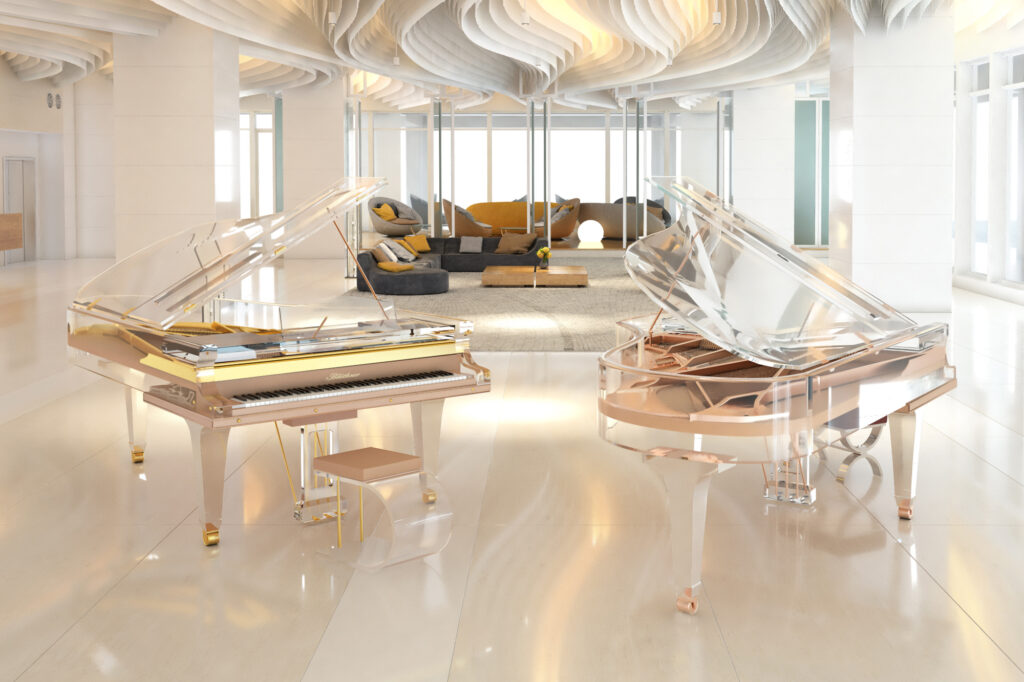
A crystal piano is often described as transparent, luminous, sculptural, or even weightless. But beyond its striking appearance, the material itself is what makes this instrument so unique. For designers, architects, and discerning clients, understanding what a crystal piano is made of helps explain why it can feel both visually modern and deeply rooted in traditional acoustic piano craftsmanship.
But what is it actually made of?
For designers, architects, and discerning clients, the material matters. A piano like the Blüthner Crystal Edition is not simply a traditional grand piano with a clear outer shell. It is a carefully engineered instrument where material, structure, light, sound, and craftsmanship all have to work together.
The result is a piano that feels visually modern while remaining deeply rooted in traditional acoustic piano making.
That balance is what makes the Crystal Edition so extraordinary.
Is a Crystal Piano Really Made of Crystal?
Not in the traditional mineral sense.
The word “crystal” describes the visual effect: clarity, brilliance, transparency, and the way the instrument catches and reflects light. The case is not made from fragile cut crystal or ordinary glass. It is also more specific than what many people casually call “plexiglass.”
Blüthner describes the material used in the Crystal Edition as medical-grade acrylic — a high-quality acrylic material chosen for its clarity, stability, and refined appearance.
This distinction matters.
Acrylic is a family of transparent materials, but not all acrylic is created for the same purpose. Standard acrylic may be suitable for signage, displays, protective panels, or general fabrication. Medical-grade acrylic is associated with a higher level of material control. In medical and technical applications, acrylic materials may be selected for qualities such as purity, biocompatibility, chemical stability, clarity, and consistency.
For a crystal piano, that level of refinement is important.
The transparent material is not simply decorative. It is part of a working musical instrument — one that contains thousands of parts, produces powerful vibration, supports tremendous string tension, and must remain stable and beautiful over time.
The use of medical-grade acrylic allows the piano to achieve its signature crystal-like appearance while remaining practical for a serious acoustic instrument. It gives the case its remarkable transparency, but with the strength, polish, and durability needed for a luxury piano designed to be lived with, performed on, and admired for years.
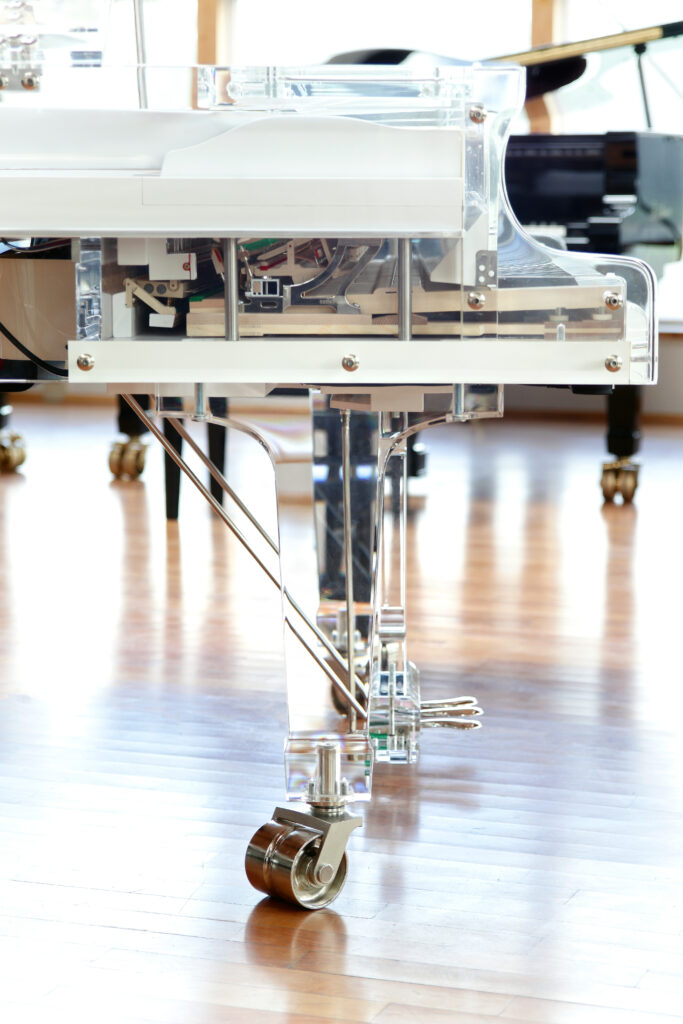
Why a Crystal Piano Uses Acrylic Instead of Glass
Glass is beautiful, but it is not the ideal material for this kind of piano case.
Acrylic offers several advantages that make it better suited for a transparent grand piano:
- It is clearer and lighter in appearance than many traditional materials.
- It can be shaped into elegant forms.
- It is more practical than glass for large sculptural components.
- It allows light to pass through the instrument in a way that creates visual depth.
- It can be combined with wood, metal, color, LED illumination, and custom finishes.
- It supports the design goal of creating a piano that appears visually lighter than a traditional grand.
For a luxury interior, this matters. A black grand piano can be beautiful, but it carries visual weight. It often anchors a room heavily. A crystal acrylic piano changes that relationship.
Instead of feeling like a large dark object placed in the space, it becomes part of the atmosphere of the room.
Light moves through it. Architecture remains visible around it. The piano becomes both present and transparent.
The Beauty of Seeing Through the Instrument
One of the most captivating qualities of a Crystal piano is that it reveals what is usually hidden.
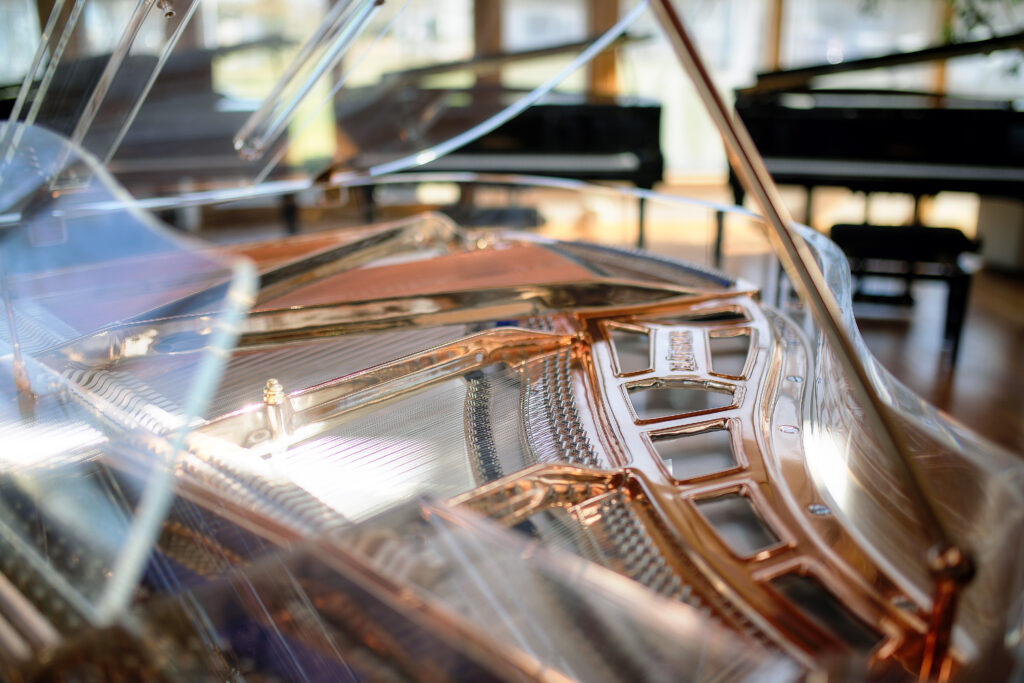
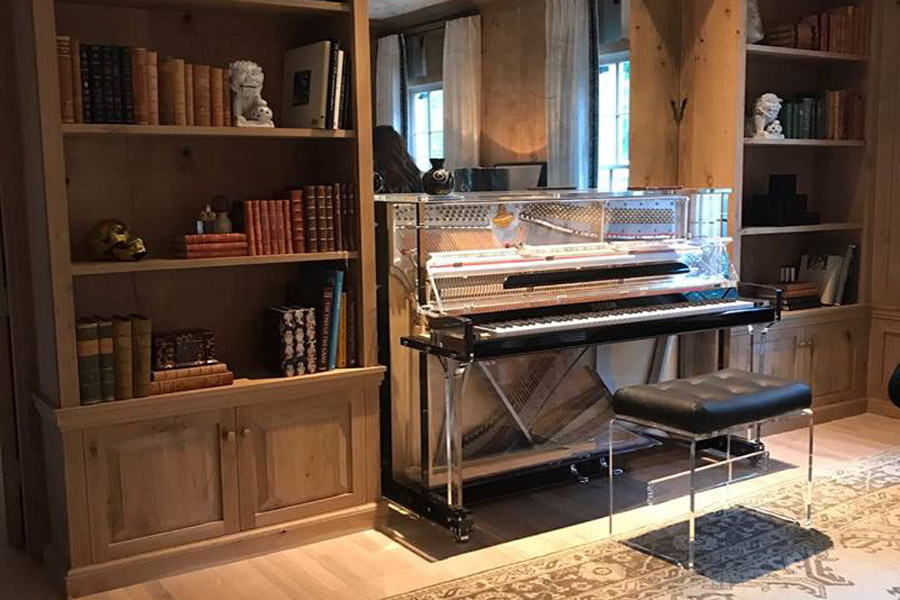
In a traditional grand piano, the case conceals much of the instrument’s structure. With a transparent or semi-transparent case, the viewer can see more of the piano’s internal world: the plate, strings, soundboard, action movement, pedals, and mechanical architecture.
For designers, this creates a rare opportunity.
The piano is no longer simply an object in the room. It becomes a visual conversation between material and mechanism.
You see craftsmanship.
You see engineering.
You see music before a single note is played.
This is especially powerful in luxury interiors where every material has been selected with intention. The transparency allows the piano to participate in the room without overwhelming it.
How a Transparent Grand Piano Changes the Room
The Crystal Edition is not only about the piano itself. It is about what the material does to the surrounding space.
Acrylic interacts beautifully with:
- Natural light
- Interior lighting
- Stone
- glass
- polished metal
- lacquer
- marble
- warm wood tones
- neutral palettes
- dramatic color schemes
In a bright contemporary room, the transparency can feel clean and architectural. In an evening setting, especially with LED illumination, the piano becomes atmospheric and almost jewel-like. In a yacht, hotel, gallery-like residence, or showhouse, the material creates a sense of surprise without feeling decorative for decoration’s sake.
The piano reflects the environment, but it does not disappear.
That is the key.
It remains a grand piano — elegant, musical, and commanding — but the acrylic case gives it a sense of lightness that traditional casework cannot achieve.
A Crystal piano does not simply occupy a room. It changes how light, architecture, and music are experienced within it.
A Crystal Piano Is Still a True Acoustic Instrument
The acrylic case may be contemporary, but the heart of the instrument remains a true acoustic piano.
This is one of the most important points for clients to understand.
A Blüthner Crystal piano is not a decorative object shaped like a piano. It is a world-class acoustic instrument housed in a reimagined case. The musical structure still matters: soundboard, strings, bridges, hammers, action, regulation, voicing, and final preparation all contribute to the experience.
The material is visual.
The instrument is musical.
The design succeeds because both are respected.
That is why the Crystal Edition is so compelling. It brings modern material innovation together with traditional German piano craftsmanship.
Crystal Piano Customization Options
One of the most useful things for designers to know is that the Crystal Edition is not limited to one look.
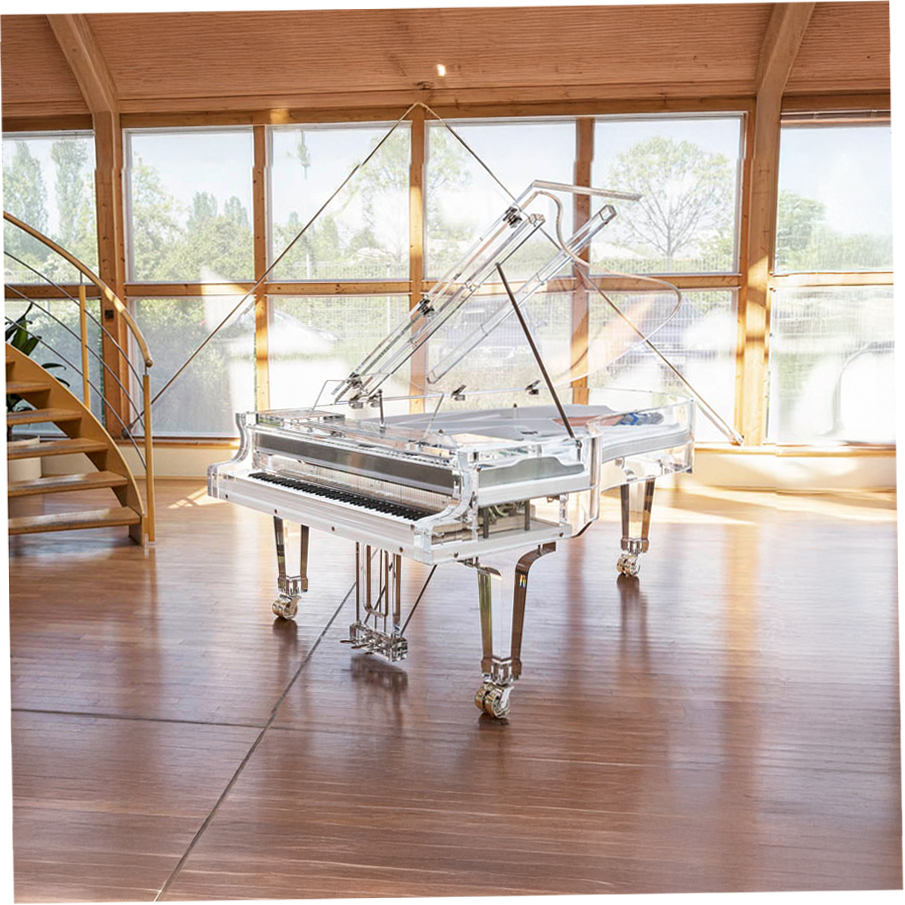
There are multiple expressions within the Crystal family, from fully transparent designs to models that combine acrylic with traditional wood, color, metallic finishes, or custom artwork.
Depending on the project, a client may want:
- a fully transparent grand for a gallery-like or contemporary space
- a white or black structure with acrylic elements for a softer statement
- a colored acrylic design for a bolder interior
- a semi-transparent model with wood details
- LED illumination for evening ambiance
- custom metal finishes
- personalized artwork or design details
- marine-grade options for yacht installations
This flexibility is what makes the Crystal Edition especially valuable for design professionals. It can be specified as a quiet architectural element or as the defining feature of the room.
The point is not simply transparency.
The point is control: control of light, color, finish, visibility, and presence.
Material Integrity Matters in Crystal Piano Design
Transparent materials leave very little room for compromise.
With a traditional opaque piano case, the finish can conceal a great deal. With crystal acrylic, the material itself becomes part of the visual performance. Clarity, polish, edge quality, shaping, and long-term stability all matter.
This is why the Crystal Edition should not be viewed as a novelty instrument or simply a clear piano case. It is a serious material specification.
Medical-grade acrylic brings a level of refinement beyond ordinary acrylic sheet. In general, medical-grade acrylic materials are selected for consistency, purity, and performance in demanding environments. For the Crystal Edition, the result is a material that supports both the visual goal and the practical demands of a luxury acoustic instrument.
Designers should ask:
What type of acrylic is being used?
The transparent components should be made from a high-quality material appropriate for a luxury, long-term installation.
How is the case engineered?
The piano must retain proper structure and acoustic integrity.
How will the acrylic be polished, shaped, and finished?
The clarity of the material depends not only on the acrylic itself, but also on the craftsmanship used to form and finish it.
How should the surface be cleaned and maintained?
Acrylic should be cared for with appropriate products and soft materials. Abrasive cleaners or rough cloths should be avoided.
How will lighting affect the material?
Natural light, interior lighting, and LED illumination can dramatically change the way the piano is experienced in the room.
Is the instrument being prepared by piano specialists?
A beautiful case still requires expert musical preparation. Regulation, voicing, tuning, and final installation all matter.
These questions help ensure the piano is not only visually impressive on installation day, but also appropriate for the client’s long-term enjoyment.
Crystal Piano Care and Placement Considerations
A crystal acrylic piano is designed to be lived with and enjoyed, but it should still be treated as a fine instrument.
As with any acoustic piano, placement matters. Avoid direct HVAC airflow, extreme humidity swings, and harsh direct sun exposure. The piano should be placed in a stable interior environment where both the musical instrument and the acrylic elements can be maintained properly.
Cleaning should be done with appropriate products and soft materials recommended for acrylic surfaces. Abrasive cleaners or rough cloths should be avoided.
This is not difficult care, but it is specific care.
For designers, the best approach is to discuss placement and maintenance during the specification process, not after delivery.
When the Material Becomes the Statement
The most successful luxury interiors are never built from appearance alone. They are built from materials that hold up to closer attention.
Stone has depth.
Wood has grain.
Metal has reflection.
Textiles have texture.
Acrylic, when used at this level, has light.
That is what makes the Crystal piano so unique.
It brings the visual language of transparency into a category that has historically been defined by wood, lacquer, and tradition. It allows the piano to feel architectural, modern, and unexpected without giving up the soul of the acoustic instrument.
For the right project, this is more than a piano selection.
It is a material decision.
A lighting decision.
A sculptural decision.
And, ultimately, a musical one.
When a Crystal Piano Becomes the Statement
At Luxe Pianos, we help designers, architects, and private clients understand the options within the Blüthner Crystal Edition and select the right instrument for the room, the client, and the intended use.
Whether the vision is fully transparent, softly translucent, illuminated, colorful, minimal, or boldly custom, the Crystal piano offers a rare opportunity: a world-class acoustic instrument designed as a true architectural statement.
For projects where ordinary is not enough, the material makes all the difference.
Specify a Crystal Piano With Confidence
Every Crystal piano begins with a conversation. We can help with model selection, finish direction, dimensions, renderings, installation considerations, and custom options for luxury residential, hospitality, yacht, and commercial projects.
A crystal piano is not made from fragile glass or decorative crystal. It is a serious acoustic instrument housed in a carefully engineered acrylic case — a material chosen for clarity, light, strength, and sculptural possibility. For designers, understanding the material is the first step in specifying the piano with confidence.
FAQ
Is a crystal piano made of real glass?
No. The transparent case components are made from medical-grade acrylic, often called acrylic glass. This gives the piano its clear, crystal-like appearance while allowing the case to be engineered for a working acoustic instrument.
Why is acrylic used in a crystal piano?
Acrylic offers clarity, design flexibility, and practicality for large transparent components. It allows the piano to appear visually light while still supporting the design and structural needs of the instrument.
Does a crystal piano sound different from a traditional grand piano?
The case design is unique, but the instrument remains a true acoustic piano. The final sound depends on the piano’s scale design, soundboard, strings, action, preparation, regulation, voicing, and installation environment.
Can the acrylic be customized?
Yes. Depending on the model, Crystal Edition pianos may include custom colors, LED illumination, metal finishes, semi-transparent elements, artwork, or other bespoke design features.
Is a crystal piano appropriate for interior designers to specify?
Yes. A Crystal piano is especially well suited for luxury residences, showhouses, hospitality spaces, yacht interiors, galleries, and private clients who want an instrument that functions as both a musical centerpiece and an architectural statement.