Restored Grand Piano For Luxury Interiors
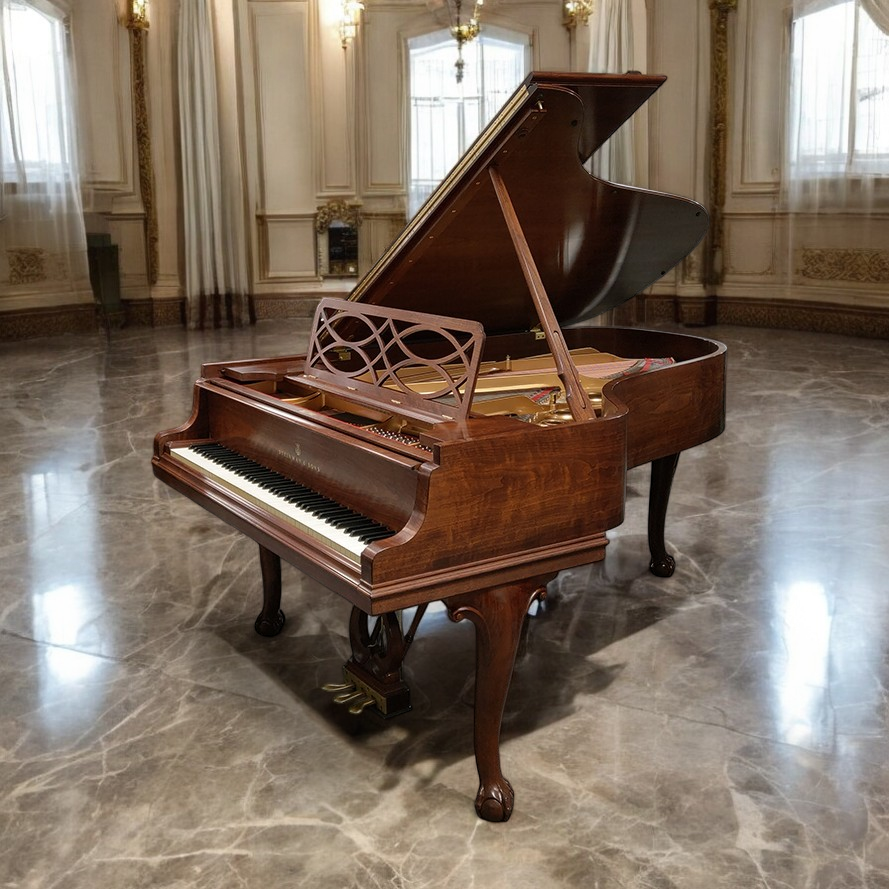
A grand piano may be beautiful. But is it truly worthy of the room?
In luxury interiors, beauty is only the beginning.
Designers and discerning clients understand that the most meaningful pieces in a home are rarely chosen for appearance alone. They carry presence. They have proportion, material integrity, story, craftsmanship, and permanence.
A restored grand piano can offer all of this — but only when the restoration has been done with the same seriousness as the design of the room itself.
At Luxe Pianos, we believe a piano selected for an exceptional interior should be more than visually impressive. It should be musically alive, structurally sound, historically respected, and prepared to perform beautifully for the next generation.
That distinction matters.
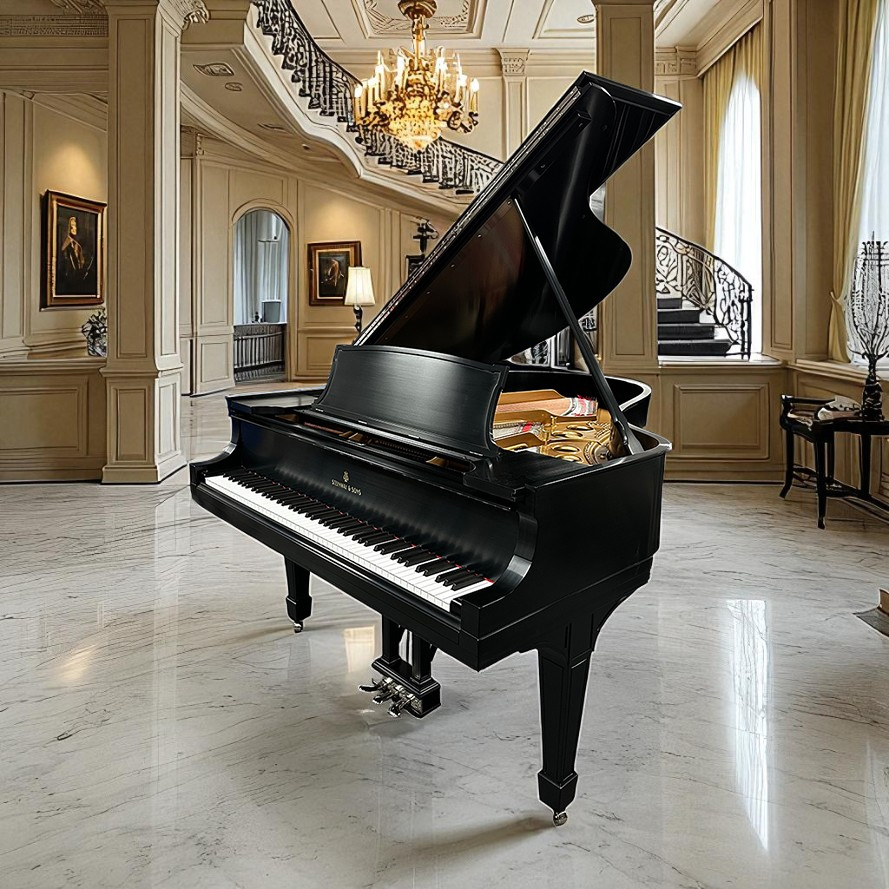
Inside the Beauty: Why Restoration Quality Matters
A grand piano occupies a rare category. It is furniture, sculpture, engineering, history, and music all at once.
From a design perspective, the exterior may be what first captures attention: the curve of the rim, the leg style, the veneer, the polish, the hardware, the lid line, and the way it reflects light in the room.
But the true value of a piano lies deeper.
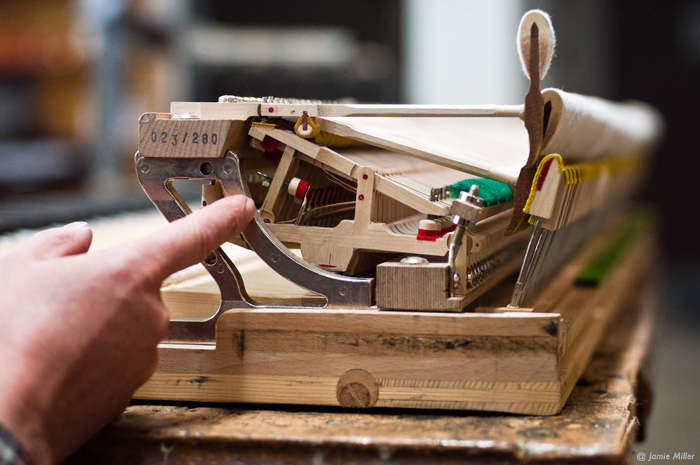
Inside the case are thousands of parts working together with extraordinary precision. The soundboard, bridges, pinblock, strings, hammers, dampers, keys, action, pedals, and regulation all determine whether the instrument is merely decorative — or genuinely exceptional.
For this reason, a restored piano should never be evaluated by finish alone.
A beautiful cabinet can hide a tired instrument. A polished exterior can disguise structural weakness, unstable tuning, poor action geometry, or a tone that no longer reflects the piano’s original potential.
For designers, this is important because the piano must not only look right on installation day. It must continue to serve the client, the room, and the music for years to come.
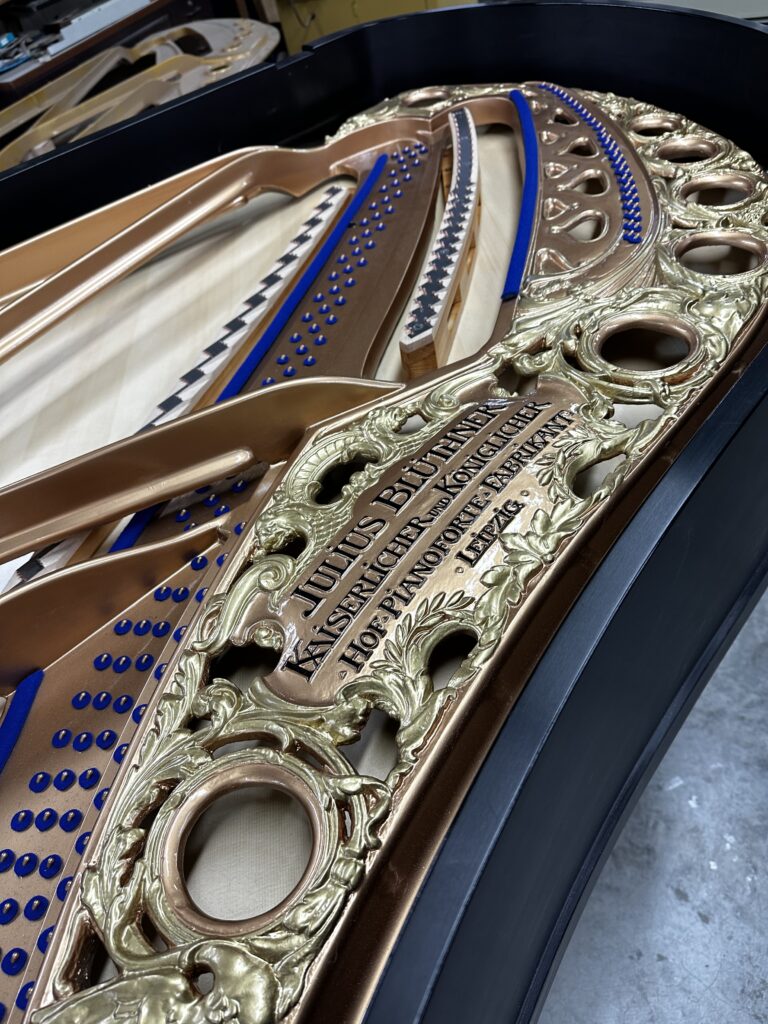
Provenance gives a piano its soul
One of the great advantages of a restored vintage grand is that it brings a sense of origin into the interior.
A fine historic piano is not generic. It was built in a specific era, by a specific maker, with materials, methods, and design details that often cannot be replicated in the same way today.
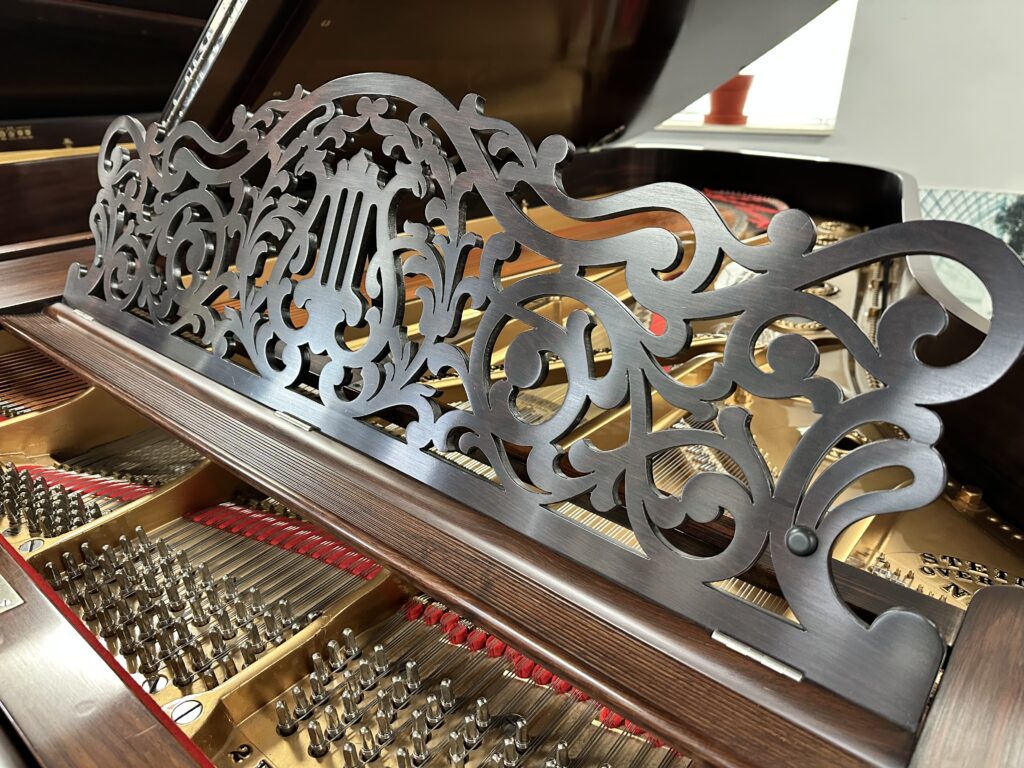
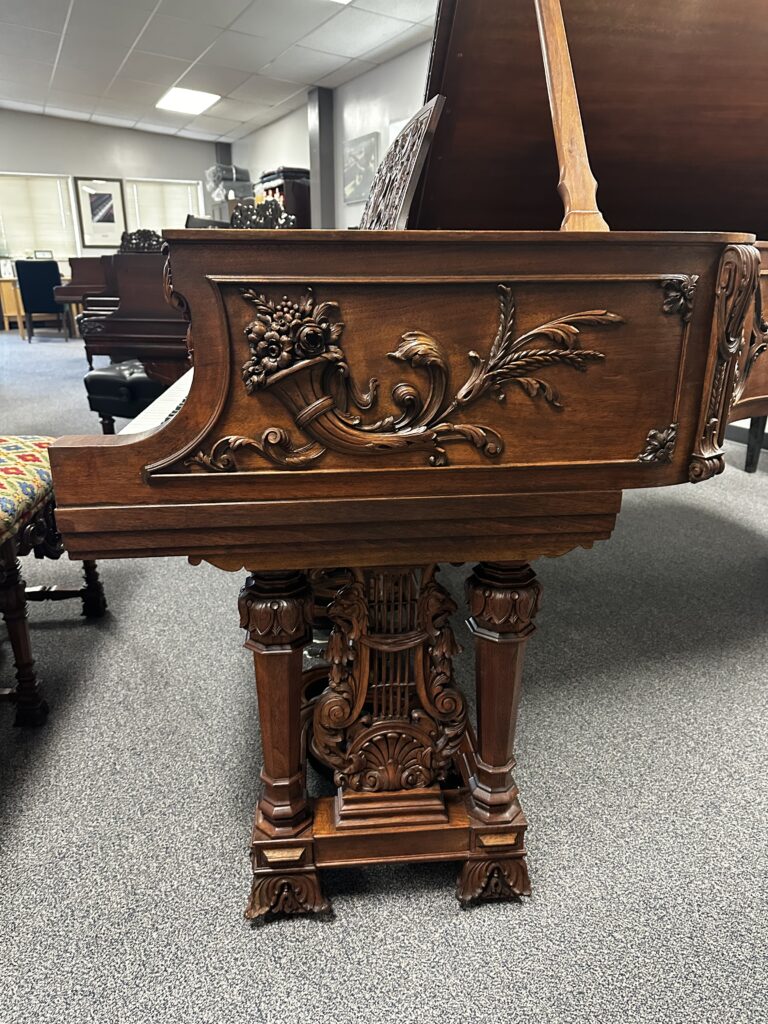
A restored Steinway, Blüthner, Knabe, Mason & Hamlin, Erard, or other fine instrument may carry the visual language of its period: Victorian elegance, early 20th-century refinement, traditional veneer work, carved legs, rosewood, mahogany, walnut, satin ebony, or art-case details.
These are not simply decorative choices. They are part of the instrument’s identity.
In interiors where authenticity matters, this kind of provenance is powerful. A restored grand piano can bring history into a modern space without feeling dated. It can soften contemporary architecture, enrich a traditional room, or create a point of contrast in a layered, collected interior.
The result is not a showroom look. It is a room with depth.
Restoration quality determines long-term value
Not all restored pianos are restored to the same standard.
Some are cosmetically refreshed. Some are partially repaired. Some are rebuilt only where failure is obvious. Others are fully restored with the goal of returning the instrument to a high level of musical and structural integrity.
For a luxury client, that difference matters.
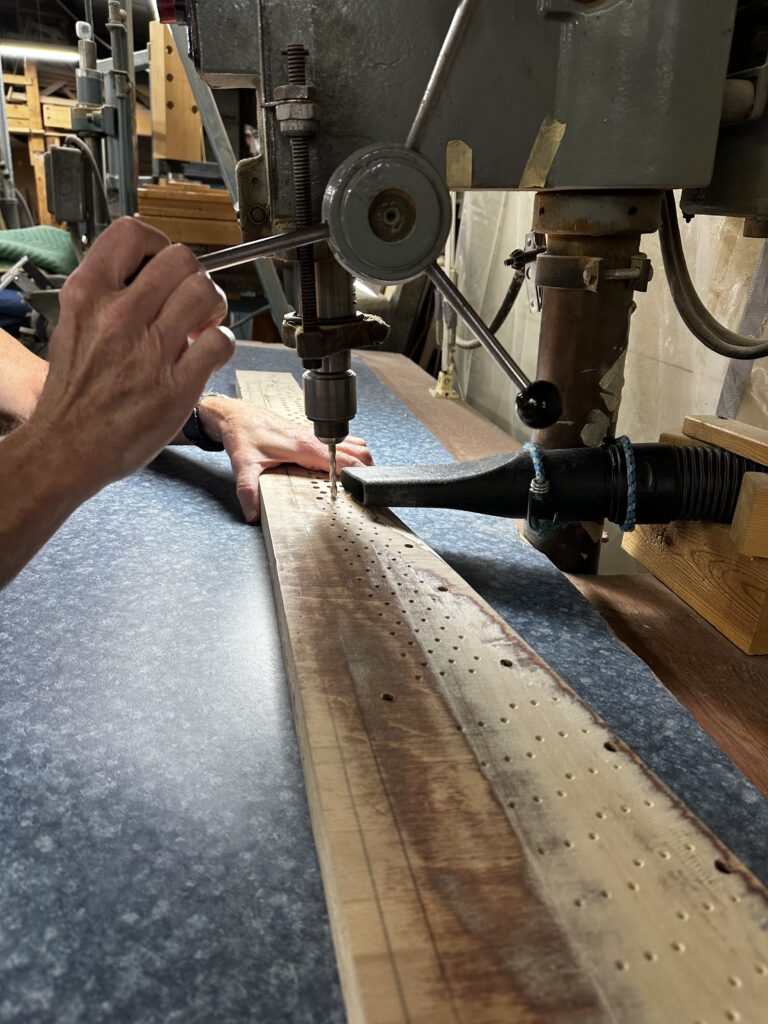
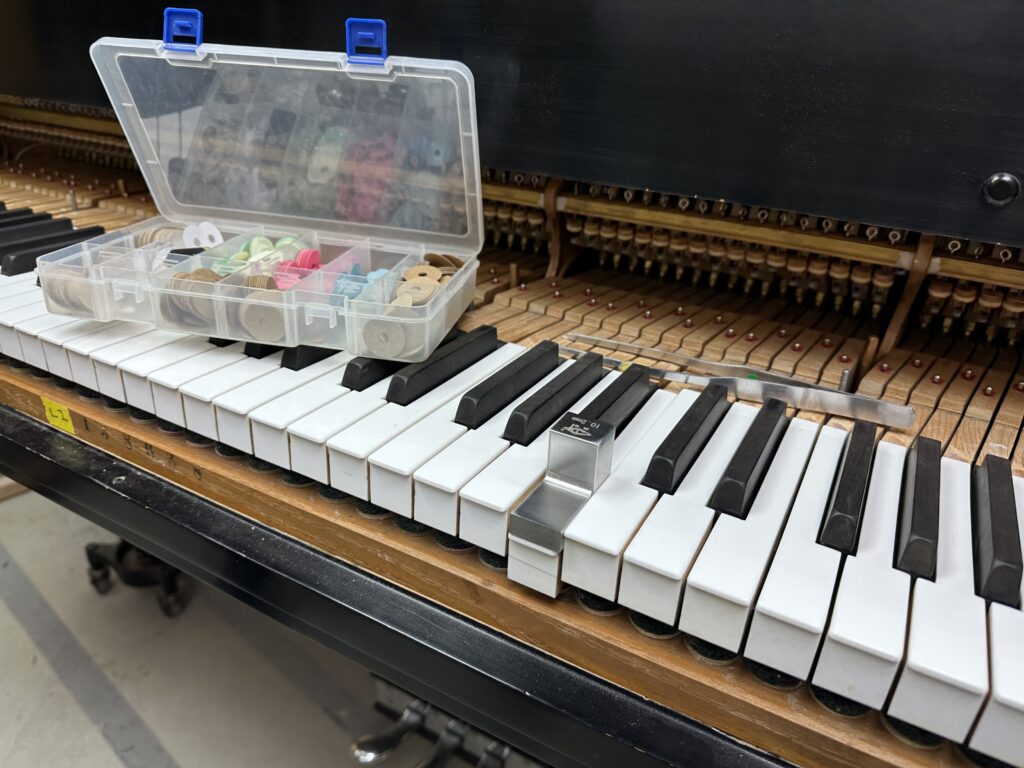
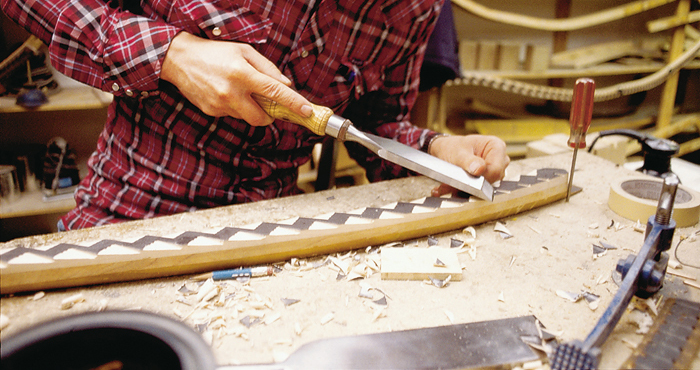
A serious restoration may involve:
- Complete evaluation of the piano’s structure
- Soundboard and bridge assessment
- Pinblock replacement
- New strings and tuning pins
- Plate refinishing
- Action parts replacement
- Hammer replacement, installation, and voicing
- Key work and regulation
- Damper system restoration
- Pedal and trapwork refinement
- Cabinet refinishing
- Final preparation for touch, tone, and performance
This is why a restored piano should be purchased from people who understand the instrument from the inside out.
At Luxe Pianos, our restored instruments are backed by the depth of Reeder Pianos’ restoration facility. This matters because a luxury piano is not simply sourced. It is evaluated, rebuilt, regulated, voiced, finished, and prepared by specialists who understand how the entire instrument works as a whole.
Designers should ask different questions
When selecting a restored piano for a project, the conversation should go beyond size, finish, and price.
Important questions include:
What was actually restored?
Was the instrument fully rebuilt, partially restored, or cosmetically refinished? A listing should be clear about the scope of work.
Who performed the restoration?
A piano restored by experienced rebuilders carries a different level of confidence than one repaired through disconnected vendors or unknown sources.
Is the piano musically prepared?
A luxury piano should be regulated and voiced, not simply tuned. The way the piano feels under the hand and speaks in the room is part of its value.
Does the piano fit the client’s use?
Some clients want an heirloom instrument for serious playing. Others want a visually commanding piano that can also perform beautifully for gatherings. The right choice depends on lifestyle as much as aesthetics.
Is there support after delivery?
Pianos are living instruments. Long-term care, warranty support, and technical guidance should be part of the conversation.
The exterior should honor the interior
A restored grand piano should never feel like an afterthought.
The finish, veneer, leg style, hardware, and scale should be considered in relationship to the architecture and furnishings around it.
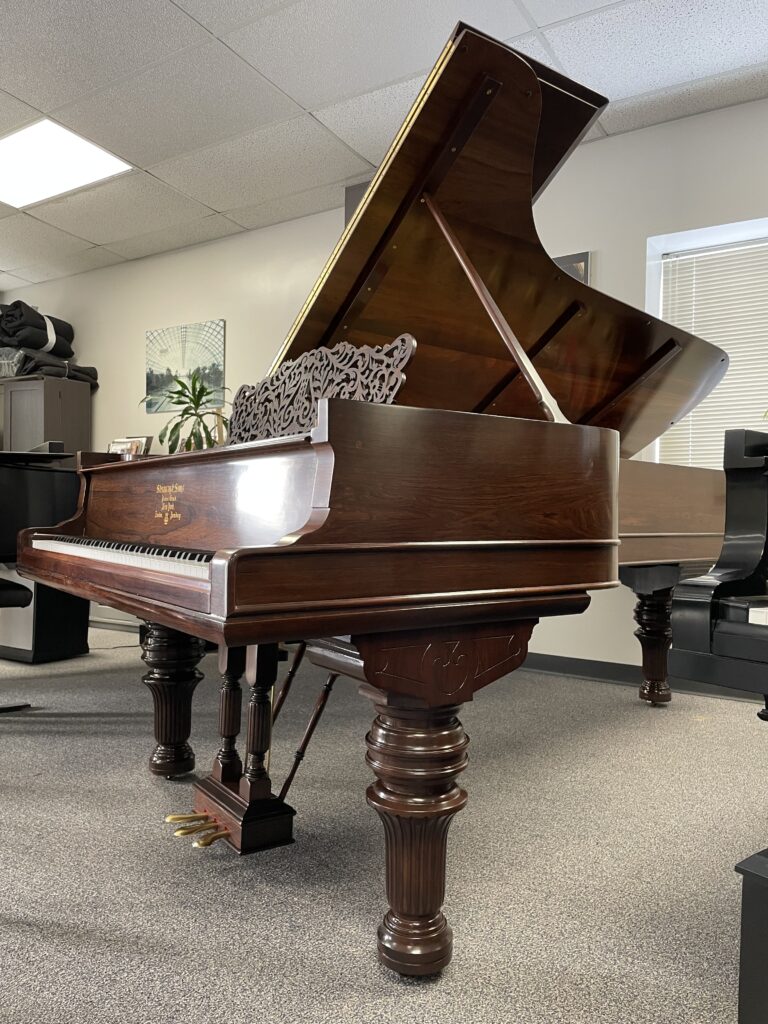
A rosewood or mahogany grand can bring warmth and historical richness to a library, salon, or formal living room. A satin ebony grand can feel timeless and restrained in a modern or transitional interior. A carved art-case piano can become a true collector’s piece in a residence where antiques, art, and architecture are already in dialogue.
The goal is not simply to “match” the room.
The goal is to choose a piano with enough integrity to belong there.
The sound is part of the design experience
A room with a fine piano feels different.
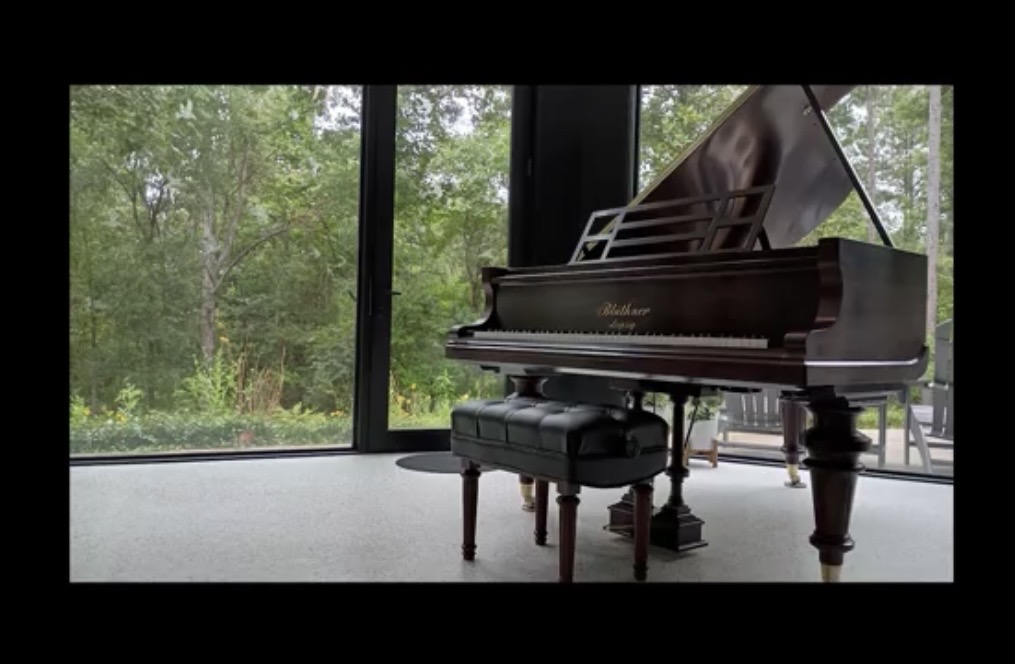
Even before it is played, the piano suggests culture, hospitality, permanence, and refinement. When it is played, the room changes completely.
The sound becomes part of the architecture.
This is where restored grand pianos offer something that purely decorative objects cannot. They are not passive. They invite interaction. They create memory. They gather people.
For luxury residential, hospitality, and private client projects, this emotional quality is often the difference between a beautiful space and an unforgettable one.
A restored piano is a legacy decision
The best interiors are not built around disposable choices.
They are composed with pieces that will age well, hold meaning, and continue to offer beauty beyond the current trend cycle.
A properly restored grand piano belongs in that category.
It can be played, admired, maintained, and eventually passed forward. It can become part of a family’s story or a defining feature of a residence, hotel, private club, or showpiece interior.
For clients who value craftsmanship, provenance, and individuality, a restored grand piano offers something rare: a functional work of art with a voice.
Selecting with confidence
At Luxe Pianos, we help designers, architects, and private clients select extraordinary instruments that are as musically credible as they are visually compelling.
Our restored vintage grands are backed by deep technical expertise, careful preparation, and the uncompromising standards of the Reeder Pianos restoration facility.
For designers, this means clarity and confidence.
For clients, it means beauty with substance.
For the room, it means a piano that truly belongs.
To source a restored grand piano for a luxury residence, hospitality project, or private collection, contact Luxe Pianos.