Luxe Pianos · Designer Resource
A historic piano maker with a modern design presence
In luxury interiors, the most memorable pieces are rarely chosen for appearance alone.
They carry a story.
They have origin, craftsmanship, beauty, and a sense of permanence that cannot be manufactured quickly. A fine piano belongs in that category. It is not simply a decorative object placed in a room. It is music, engineering, sculpture, history, and atmosphere all in one form.
This is one of the reasons Blüthner continues to hold such a meaningful place in the world of luxury piano design.
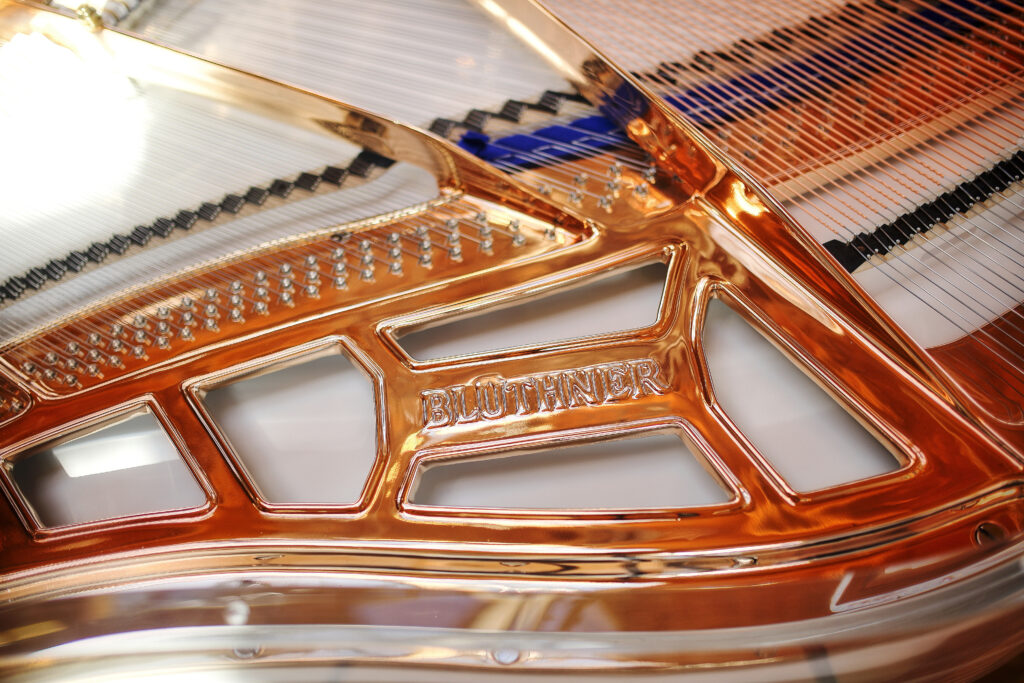
Founded in Leipzig, Germany in 1853, the Blüthner Piano Company has been building instruments for more than 170 years. Its name is associated with European craftsmanship, warm tonal beauty, and a distinct musical personality often described as the “Golden Tone.”
For designers, architects, and discerning clients, that history matters. A Blüthner piano does not only fill a space visually. It brings depth, culture, and legacy into the room.
From Leipzig to the world
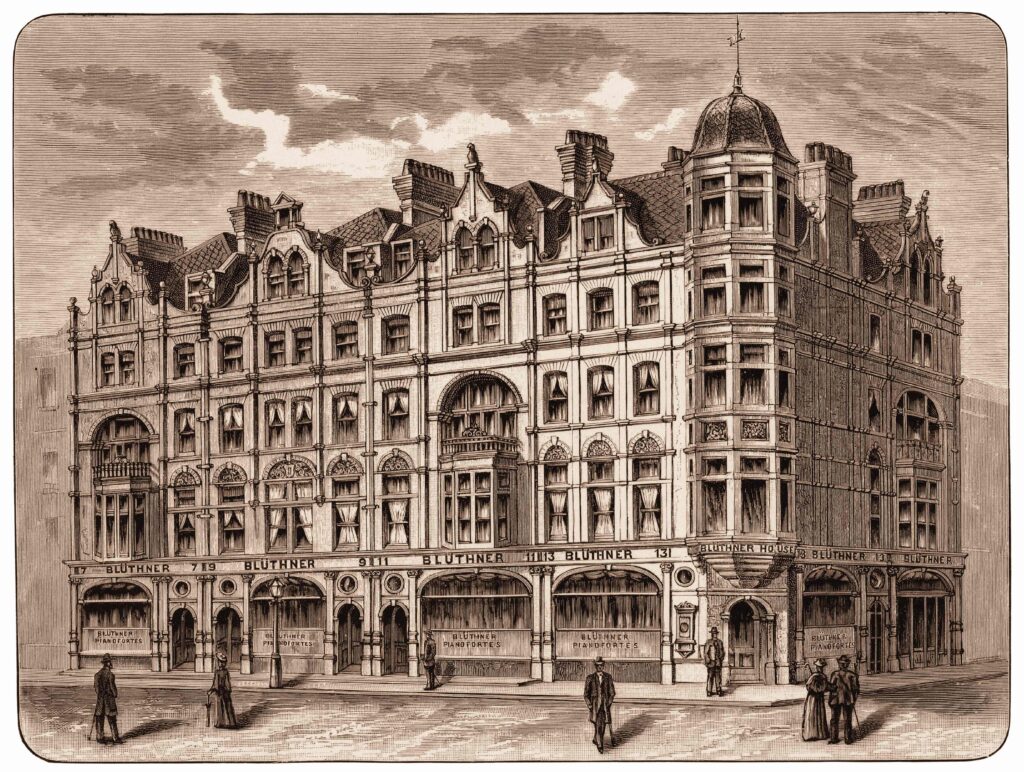
Leipzig in the 19th century was one of Europe’s great cultural centers. Music, publishing, education, and craftsmanship all flourished there, creating the kind of environment where a serious piano maker could develop both technically and artistically.
It was in this setting that Julius Blüthner founded his piano factory in 1853.
What began as a small workshop grew into one of Germany’s most respected piano companies. Blüthner instruments became known for their refinement, reliability, and unmistakable voice. The company’s reputation spread through concert halls, private salons, conservatories, and royal residences.
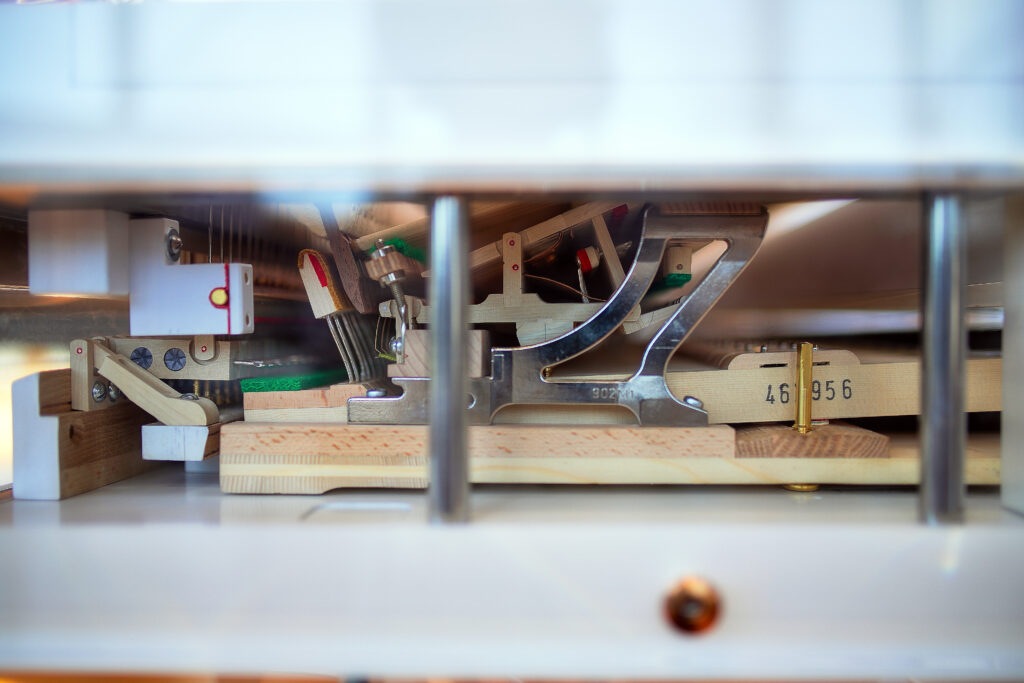
That kind of growth did not happen by chance. It came from an understanding that a piano must be more than well-built. It must be expressive. It must respond to the pianist. It must serve the music.
This remains central to the Blüthner identity today.
A Blüthner is not designed to sound harsh or overly bright. Its voice is lyrical, warm, and colorful. It has a singing quality that feels intimate even in a grand setting. This makes it especially compelling for luxury interiors where the goal is not simply impact, but atmosphere.
The “Golden Tone”
Every great piano maker has a point of view.
For Blüthner, that point of view is often described as the “Golden Tone.” It is warm, rounded, singing, and refined. Rather than pushing toward brilliance alone, Blüthner pianos are known for a tonal character that feels rich and expressive without becoming aggressive.
For a designer or high-end client, this matters because sound is part of the experience of a room.
A piano in a luxury residence, hotel, private club, or yacht is not only seen. It is heard. It changes the atmosphere when it is played. It can make a formal space feel more welcoming, a modern room feel warmer, and a gathering feel more alive.
The best interiors are not simply visual. They are sensory.
A Blüthner piano supports that kind of design thinking. Its tone has presence, but also elegance. It can hold attention without overwhelming the room.
The Aliquot system: a signature innovation
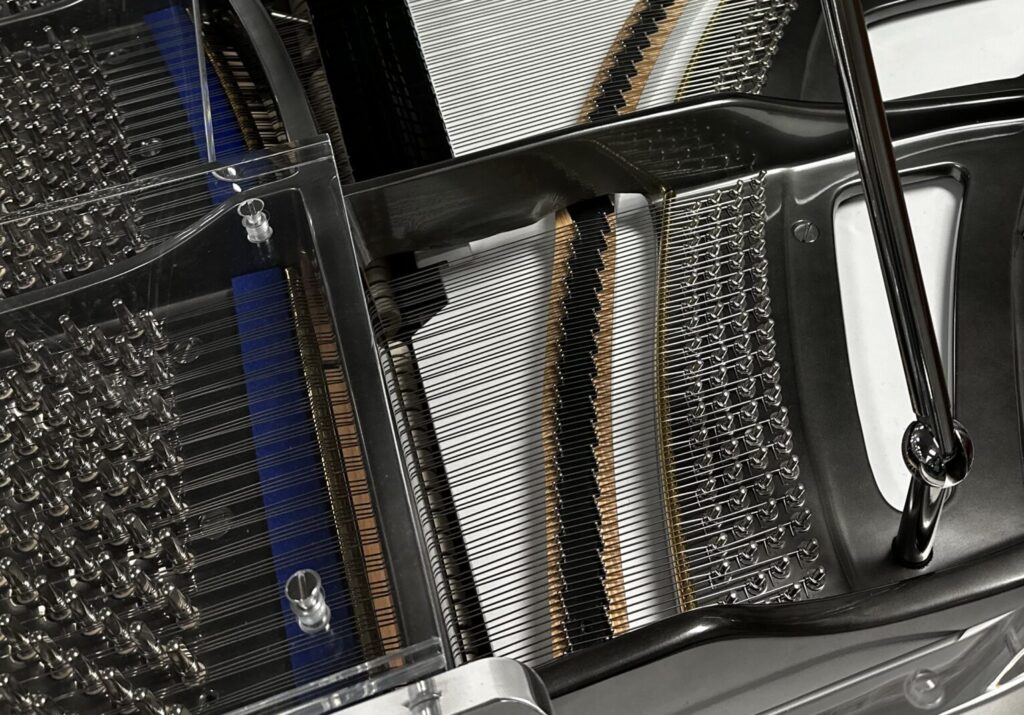
One of the most distinctive features associated with Blüthner is its patented Aliquot stringing system.
In many Blüthner grand pianos, the upper register includes an additional fourth string. This string is not struck directly by the hammer. Instead, it vibrates sympathetically, enriching the tonal color and resonance of the treble.
For clients, this technical detail may sound small. In practice, it is part of what gives Blüthner pianos their recognizable voice.
For designers, it is also a useful reminder: a fine piano is not simply a case, a finish, or a silhouette. The instrument’s inner design is what gives it life.
This is especially important in luxury interiors. A piano may be chosen for its sculptural presence, but it should still be a serious musical instrument. The beauty of a Blüthner is that the exterior and interior are both meaningful. The case may define the room visually, but the sound is what gives the piano its emotional authority.
Heritage as a design asset
In interior design, provenance has value.
A historic maker brings a layer of meaning that a generic object cannot. This is true in furniture, lighting, art, textiles, and musical instruments. When a client chooses a piano from a maker with a long and respected history, they are choosing more than a look.
They are choosing continuity.
That sense of continuity can be powerful in many types of interiors:
Traditional interiors
A Blüthner grand in a traditional room brings warmth, elegance, and old-world refinement. Veneer, polished ebony, carved details, and classic proportions can feel deeply at home in formal living rooms, music rooms, libraries, and salons.
Transitional interiors
In a transitional space, a Blüthner can serve as the bridge between classic craftsmanship and contemporary restraint. It can soften clean lines, add depth to neutral palettes, and introduce a sense of permanence.
Contemporary interiors
In modern interiors, the contrast can be especially striking. A traditional Blüthner grand can add soul and warmth to architectural spaces, while a Blüthner Crystal or bespoke designer piano can become a sculptural centerpiece without losing its musical integrity.
Hospitality and commercial spaces
For hotels, private clubs, showrooms, and luxury amenity spaces, a Blüthner piano communicates culture and sophistication immediately. It creates an atmosphere before a note is played.
The modern Blüthner: tradition and design innovation
One of the most compelling aspects of Blüthner today is the way the company continues to honor its traditional craftsmanship while also participating in contemporary design.
This is especially visible in the Blüthner Crystal and other special designer instruments.
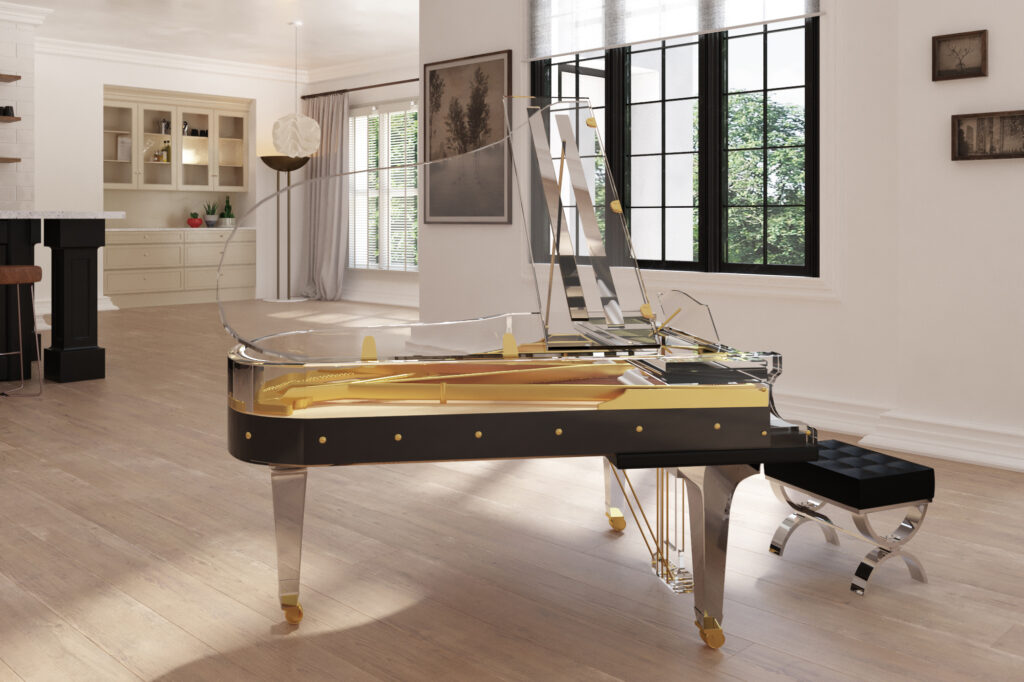
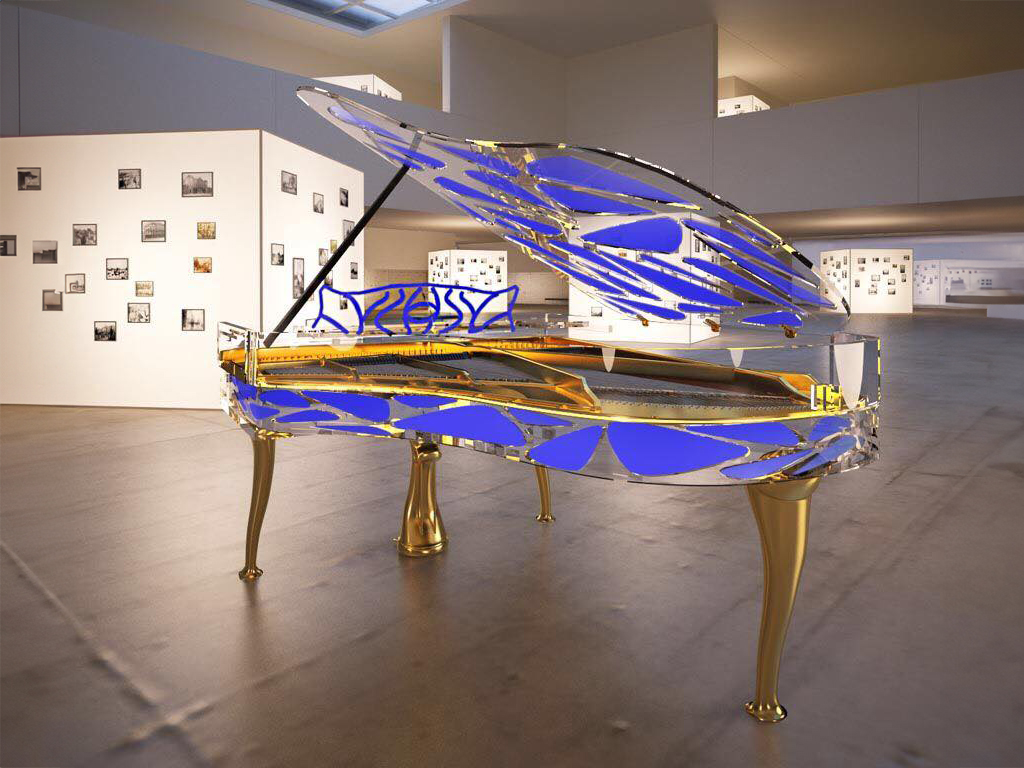
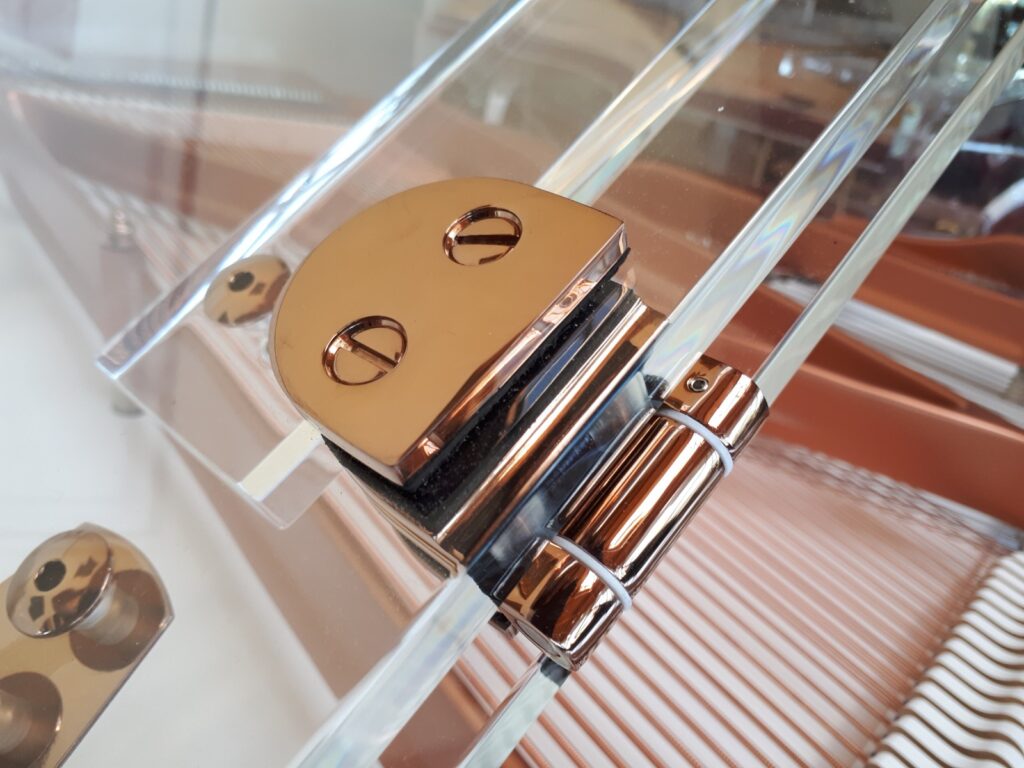
The Crystal piano is not simply a transparent object shaped like a piano. It is a true acoustic Blüthner instrument reimagined through a modern visual language. The result is a piano that feels almost weightless in the room, allowing light, architecture, and movement to interact with the instrument in a completely different way.
For designers, this opens remarkable possibilities.
A Blüthner Crystal can feel appropriate in a contemporary residence, luxury penthouse, yacht salon, hospitality space, gallery-inspired room, or showhouse. It can serve as the visual anchor of the room while still carrying the musical lineage of one of the world’s great piano makers.
This combination is rare: historic craftsmanship in a modern architectural form.
Why this matters for designers
When specifying a piano for a luxury project, the question is not only, “Will it look beautiful?”
The better question is:
Will it belong?
A piano belongs when its scale fits the room, its finish supports the design, its sound enhances the atmosphere, and its story aligns with the client’s values.
Blüthner gives designers several strong points of connection:
- A respected European maker with more than 170 years of history
- A distinctive tonal identity known for warmth and refinement
- Traditional grand pianos with timeless visual presence
- Bespoke and crystal designs for contemporary luxury spaces
- A strong story of craftsmanship, innovation, and musical culture
- An instrument that functions as both performance object and design statement
This is why a Blüthner can be so effective in high-end residential and commercial projects. It offers more than visual luxury. It offers substance.
For clients who value authenticity, that distinction matters.
A piano with permanence
Trends change. Finishes change. Rooms are renovated, redesigned, and reinterpreted over time.
A truly fine piano has a different kind of life.
It can remain with a family for generations. It can become part of a home’s identity. It can define a hotel lobby, elevate a private club, or turn a residence into a place where people gather, listen, and remember.
That permanence is part of what makes Blüthner relevant today.
A Blüthner piano carries the past without feeling trapped in it. It can be traditional, contemporary, restored, bespoke, or architectural. It can sit quietly in a room as an object of beauty, then completely change the atmosphere when played.
Few design elements can do that.
Specifying a Blüthner for a luxury interior
At Luxe Pianos, we help interior designers, architects, and private clients select pianos that are visually exceptional, musically serious, and appropriate for the space.
Whether the project calls for a traditional grand, a restored vintage instrument, or a bespoke Blüthner Crystal piano, we can help guide the conversation from both a design and technical perspective.
That includes:
- Size and scale guidance
- Finish and visual direction
- Room placement considerations
- Acoustic and climate guidance
- Bespoke design options
- Crystal piano specifications
- Player system options
- Delivery and installation planning
The goal is not simply to place a piano in a room.
The goal is to select an instrument that belongs there beautifully.
Planning a luxury interior project?
We work with interior designers, architects, and discerning clients to help specify extraordinary pianos for exceptional spaces. From restored vintage grands to bespoke Blüthner Crystal instruments, Luxe Pianos offers guidance that is both aesthetic and technically informed.
Frequently Asked Questions
Why are Blüthner pianos historically significant?
Blüthner was founded in Leipzig, Germany in 1853 and has become one of the world’s respected piano makers, known for German craftsmanship, tonal refinement, and the company’s distinctive Golden Tone.
What is the Blüthner Golden Tone?
The Golden Tone refers to the warm, lyrical, singing quality often associated with Blüthner pianos. It is one of the qualities that makes the instrument especially appealing in refined residential and performance settings.
What is the Blüthner Aliquot system?
The Aliquot system uses an additional sympathetic string in the treble section of many Blüthner grands. This string is not struck directly by the hammer but vibrates sympathetically, adding resonance and tonal color.
Are Blüthner pianos suitable for luxury interior design projects?
Yes. Blüthner pianos are especially well suited for luxury interiors because they combine musical seriousness, visual elegance, craftsmanship, and heritage. They can work beautifully in traditional, transitional, and contemporary spaces.
What makes the Blüthner Crystal different from a decorative piano?
The Blüthner Crystal is a true acoustic Blüthner instrument in a modern transparent or semi-transparent case. It is not simply a decorative object. It carries the musical heritage and craftsmanship of the Blüthner name while offering a striking architectural presence.