Hand-carved details, richly figured veneers, and the collaboration that helps a historic instrument find its next home.
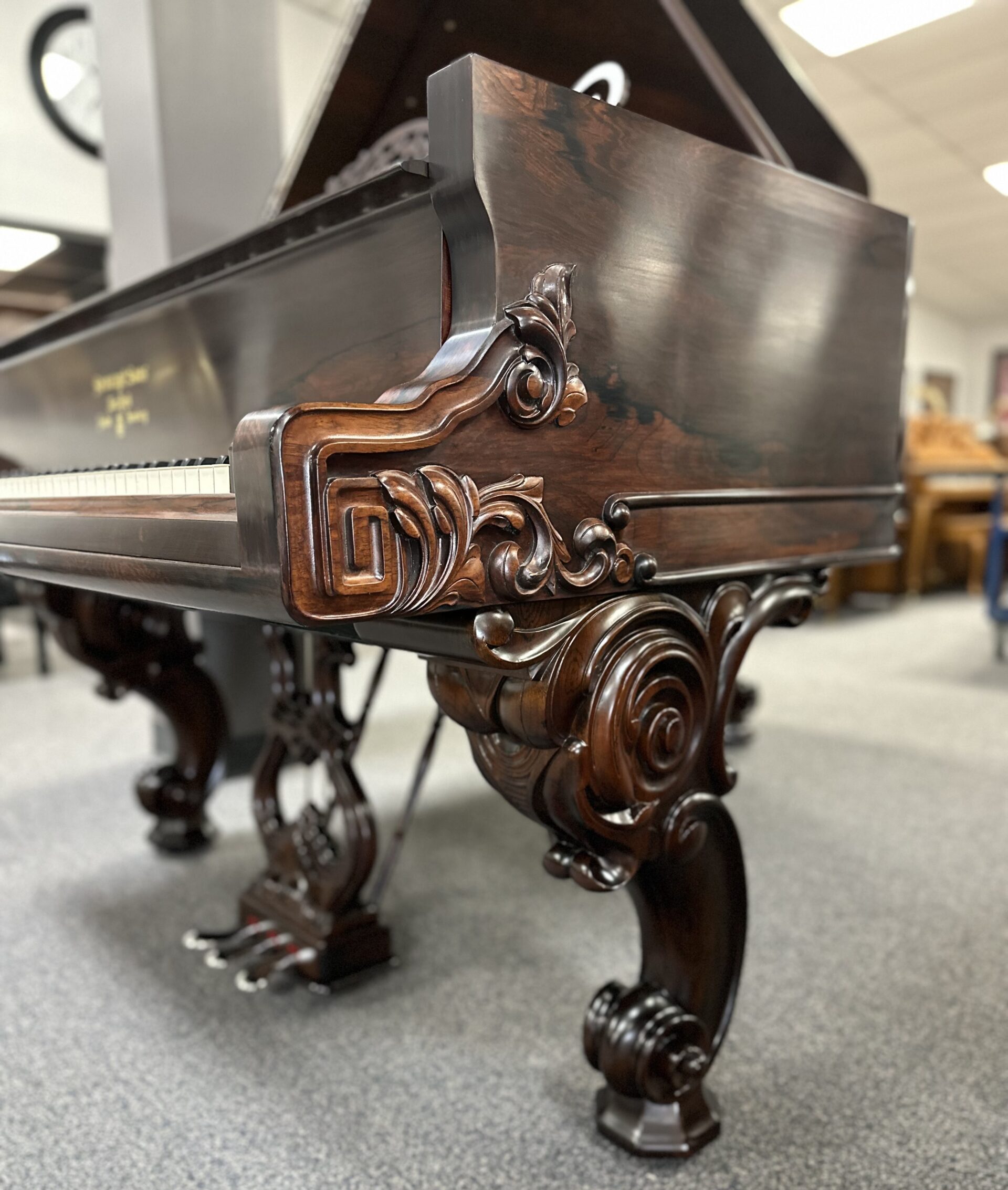
Some of the vintage grand pianos we restore are more than 100 years old. Spend a little time with one and you begin to notice the individual decisions that went into its making: the shaping of a leg, the carving beneath the keyboard, the way a cabinetmaker arranged the grain across the music desk.
Those details are part of what makes these instruments interesting to work with. Alongside their musical qualities, they offer a designer something very particular to consider—craftsmanship and materials from another era, ready to become part of a home today.
At Luxe Edition Pianos, a division of Reeder Pianos, we bring the piano knowledge to that conversation. You bring your understanding of the space and the people who will live in it. Finding the right pairing starts with sharing what each of us sees.
A Grand Piano Was Also a Piece of Fine Furniture
The grand piano has a history in both musical instrument making and decorative furniture. Historic makers offered cases that reflected different tastes, from relatively restrained forms to elaborate art-case instruments.
That variety is easy to overlook if your starting point is the familiar polished ebony grand.
Look through historic examples and you’ll find curved legs, carved scrolls and foliage, decorative moldings, and carefully worked music desks. Some draw on French furniture traditions; others have more architectural lines or let the wood itself provide most of the decoration.
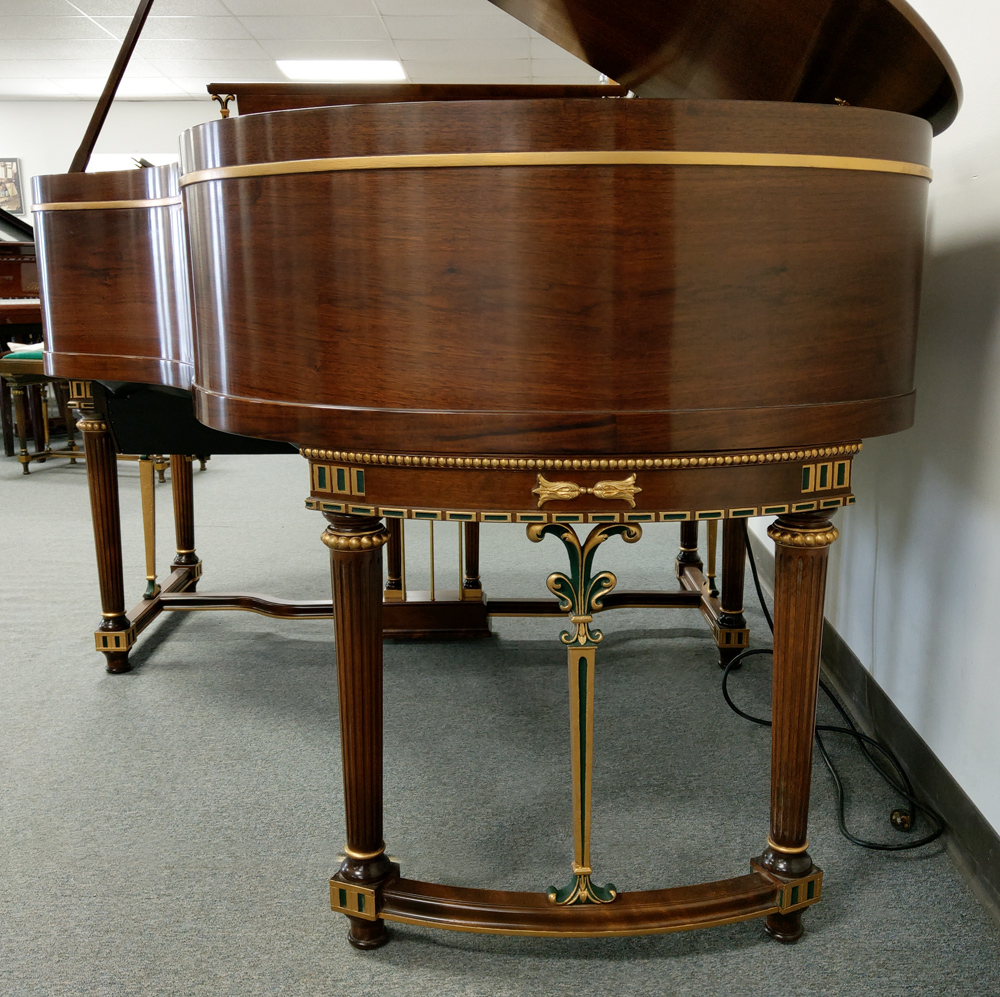
The range is well documented. The Metropolitan Museum of Art’s collection includes a Broadwood grand with rosewood veneer and carved molding, as well as an Érard with satinwood marquetry and elaborate Louis XV-style carving. These historical examples illustrate how much thought could go into a piano’s outward appearance.
For a designer considering a vintage grand, the useful question is often: which part of that character belongs in this project?
Hand-Carved Casework: The Details Reward a Closer Look
On an instrument with hand-carved casework, the interest often lies in places a standard listing photograph doesn’t show particularly well.
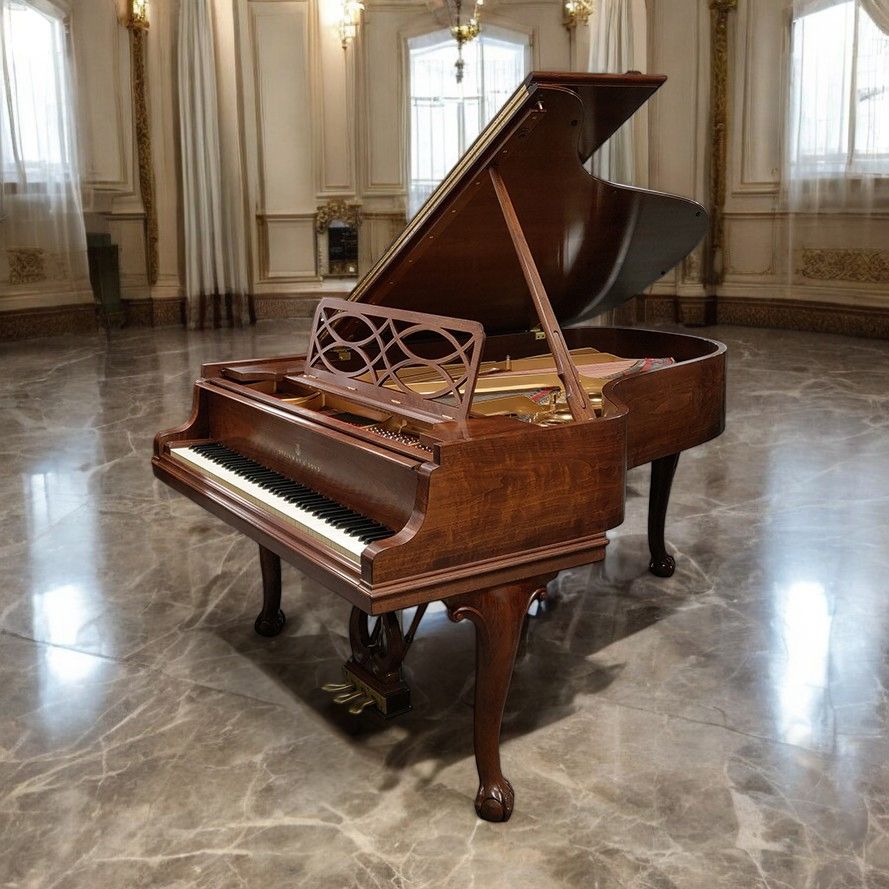
The profile of a leg, the transition from the keyboard to the curved case, or the detail of the pedal support can change how the whole piano reads. Some instruments have an expressive silhouette even when their decoration is fairly restrained. Others invite you to come closer.
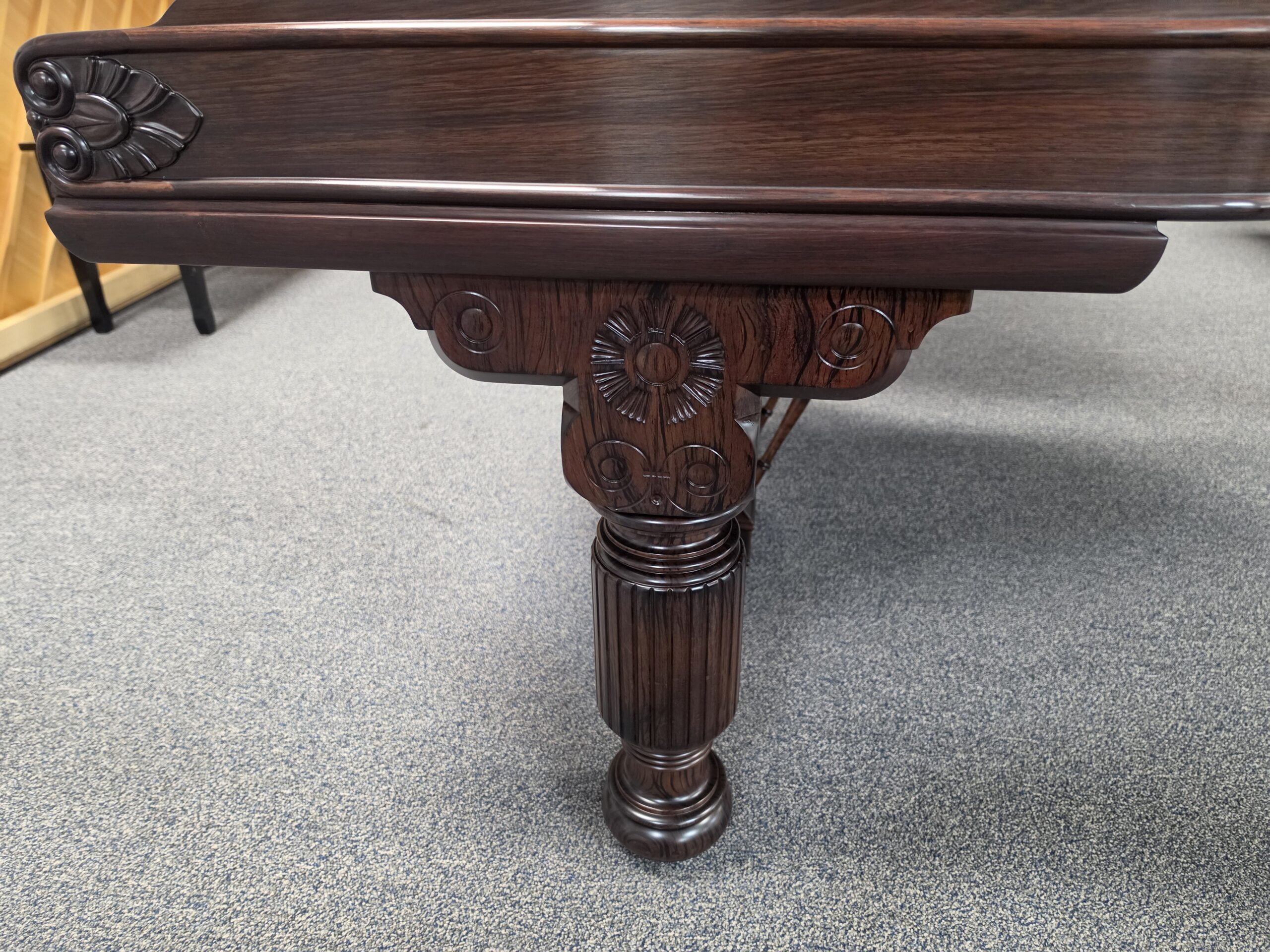
We enjoy pointing out those differences. They help explain why two grands of similar dimensions can have very different visual personalities.
You may see a connection to a piece of furniture, an architectural detail, or a material already in your scheme. Our role is to help you understand the instrument you’re considering—its age, construction, condition, and the details that make it distinctive.
Historic Piano Veneers: A Story of Their Own
The wood choices available to piano makers of the period offered a remarkable range of color and figure. Depending on the maker and instrument, you may encounter richly patterned rosewood, warm mahogany, expressive walnut, or decorative work incorporating lighter woods such as satinwood.
Even within one wood species, the appearance can vary considerably. Grain may be relatively quiet, strongly striped, or full of movement. The selection and arrangement of veneer could make the case itself the principal decorative feature.
Veneer is worth understanding here. In fine cabinetmaking, it allows carefully selected wood to be used for its visual qualities across a larger surface. Its presence is not, by itself, an indication of lesser quality.
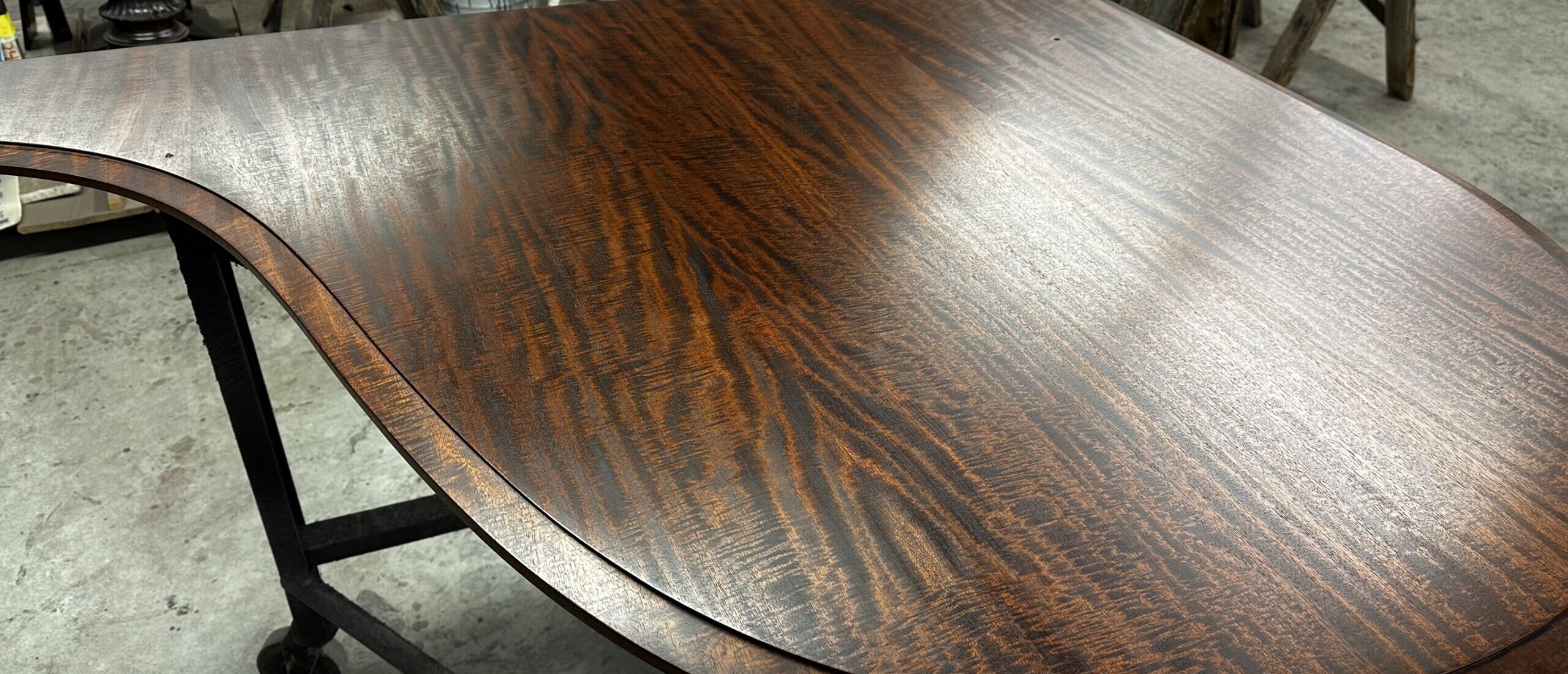
With a century-old piano, we also look at what has happened to that surface over time. Has it been refinished? Have areas been repaired or replaced? What original material remains? Those are questions to answer about the particular instrument, rather than assumptions to make from its age.
For your project, we can help clarify the wood and finish, provide closer views, and discuss what is known. You can judge how its color, pattern, and sheen relate to the room.
Restoring the Instrument Behind the Case
The historical casework is only part of our responsibility.
A piano may have survived for more than a century, but its age alone does not establish its musical condition. The structure, strings, action, keyboard, and other components need careful assessment.
Restoration involves decisions about what can be retained, what can be repaired, and what needs replacement. The scope depends on the instrument. We believe those decisions should be explained clearly, so a buyer understands both the piano’s history and the work that has brought it to its present condition.
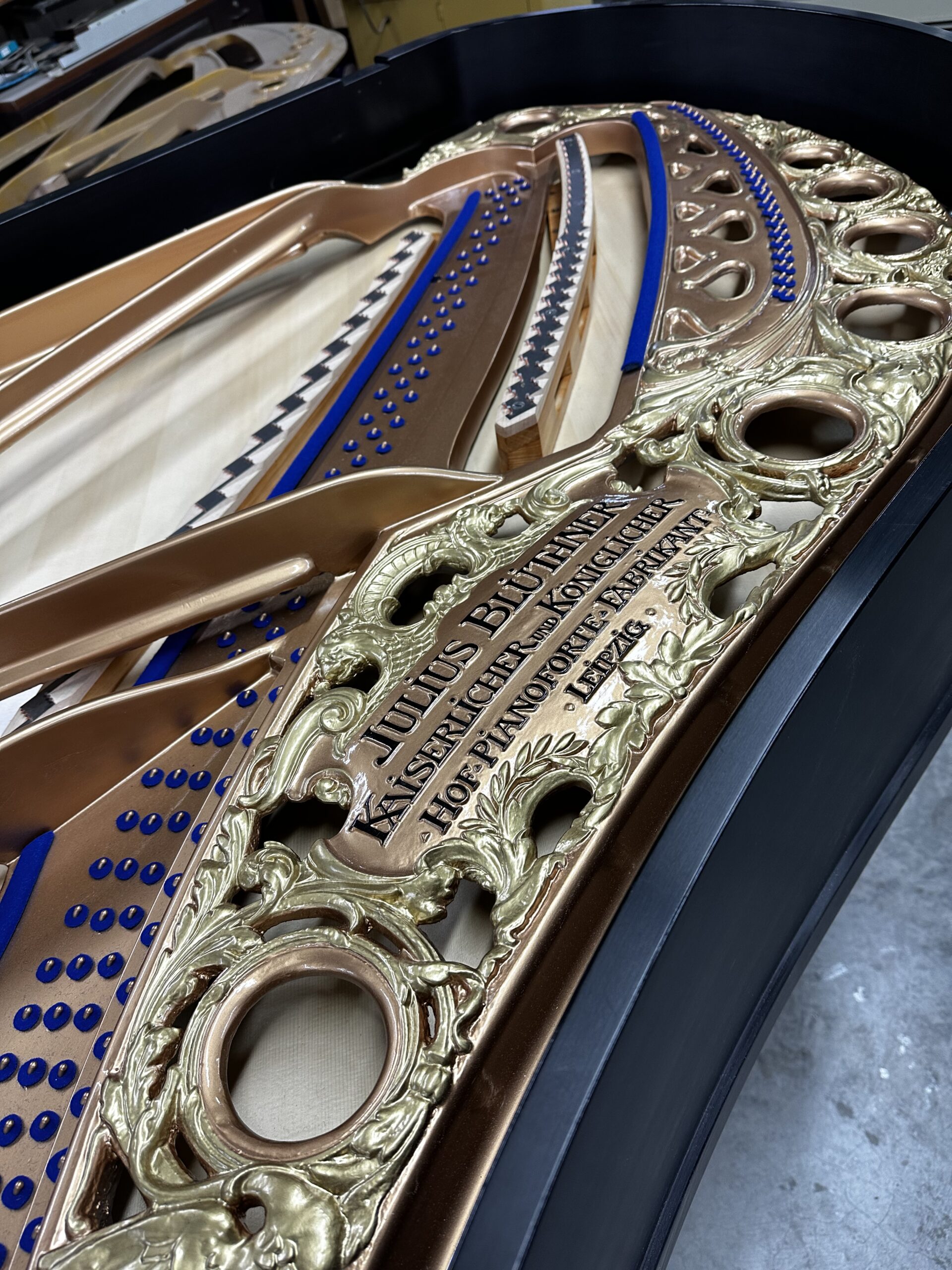
Our aim is to give these instruments a useful musical future while respecting the character that makes them worth restoring.
That matters whether the client plays every day or is choosing a piano for a home where music will be shared more occasionally. The instrument should be considered as something to hear and play, as well as something to admire.
For more on that side of the selection, read What Makes a Restored Grand Piano Worthy of a Luxury Interior?.
Finding Its Place in a Contemporary Home
The most useful conversations begin with your vision for the room. We can contribute instruments you may not have considered, along with the piano knowledge to help evaluate them.
A vintage grand with decorative casework may be the individual piece you’re looking for. A quieter instrument with an interesting veneer may be a better fit. Sometimes the deciding detail is the shape; sometimes it’s the wood; sometimes the client sits down to play and the search takes a different direction.
A floor plan, material palette, or a few reference images can give us a useful starting point. From there, we can discuss dimensions, musical preferences, condition, and practical matters such as delivery and restoration timing.
You guide the relationship between the instrument and the interior. We help you understand what each piano can bring to the project.
We Can Help Find a Vintage Grand for Your Project
The right piano may not be one we currently have showcased.
We can also serve as your finder, looking for an instrument that suits the project’s visual direction, musical requirements, size, and budget. If a particular case style or veneer interests you, that gives us a more focused place to begin.
Historic instruments are individual, so availability and condition will shape the search. Some candidates may require restoration, making it helpful to involve us early in the project schedule.
You don’t need to arrive with a maker and model already selected. Tell us what you’re hoping to find. We can help translate that idea into a search for a piano, assess promising candidates, and explain the considerations before you move forward.
The Next Chapter
Working with a piano that is more than 100 years old gives us an appreciation for the people who made it—and a responsibility to the people who will use it next.
Its carved details and carefully chosen woods belong to its history. Its next setting and musical life are still to be determined. Bringing those together is a collaboration we value.
Explore the Vintage Collection at luxepianos.com, or tell us about your project. Whether an instrument is already in our collection or needs to be found, we would welcome the conversation.
Frequently Asked Questions
Can a vintage grand piano work in a contemporary interior?
Yes. Vintage grands offer a wide range of case styles, from restrained designs to elaborate hand-carved details. The right fit depends on the individual instrument and your vision for the room. We can help you explore the available shapes, finishes, and musical characteristics while you guide the design.
Can a piano that is more than 100 years old still be a good musical instrument?
It can, but age alone doesn’t tell us how a piano will perform. We assess its structure and musical components, then determine what can be retained, repaired, or replaced. A thoughtfully restored grand can have a rewarding musical life ahead of it. We’re happy to explain the condition and restoration work associated with a particular instrument.
What kinds of wood veneers are found on vintage grand pianos?
Depending on the maker and period, vintage grands may feature rosewood, mahogany, walnut, or decorative work incorporating cherry woods or even oak. Color and grain can vary considerably, even within the same species. We can help identify a particular piano’s veneer and provide detailed photographs so you can evaluate it alongside your project’s materials.
Are all vintage grand pianos hand-carved?
No. Some have hand-carved ornamentation, while others feature simpler casework or rely on figured veneers for their visual character. We look at each instrument individually and describe its details based on what we can verify.
Does restoration preserve the piano’s original casework?
Preserving distinctive casework is an important consideration, but the approach depends on its condition and any previous alterations. Some areas may be repairable; others may require replacement or more extensive work. We can explain what remains original and what has been restored or replaced, based on the information available for that piano.
Can you find a piano that isn’t currently shown in your collection?
Yes. We can help search for a vintage grand based on your preferred case style, wood finish, size, musical needs, and budget. Availability and condition will influence the options, and some candidates may require restoration. Involving us early gives the search and any necessary work more room in the project schedule.
What should a designer share to get the search started?
A floor plan, approximate size requirements, material palette, and reference images are useful starting points. We’d also like to understand the budget, project timeline, and who will play the piano. You don’t need to have a make or model selected—we can help work through those choices with you.
Have a project in mind? Explore our Vintage Collection or contact Luxe Pianos to start the conversation.