Exploring the relationship between architectural lighting, transparency, and musical artistry.
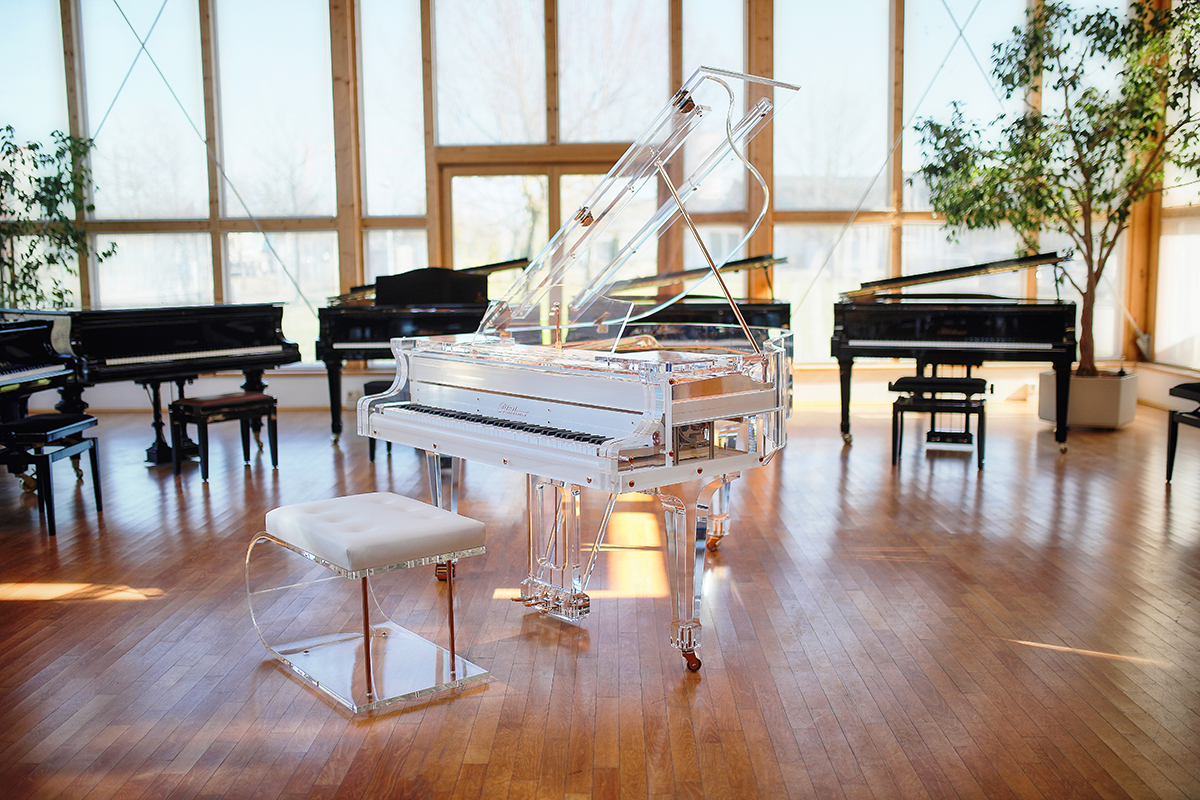
Light is among the most expressive elements in interior design. It has the ability to define architecture, reveal texture, establish mood, and change the way an object is perceived.
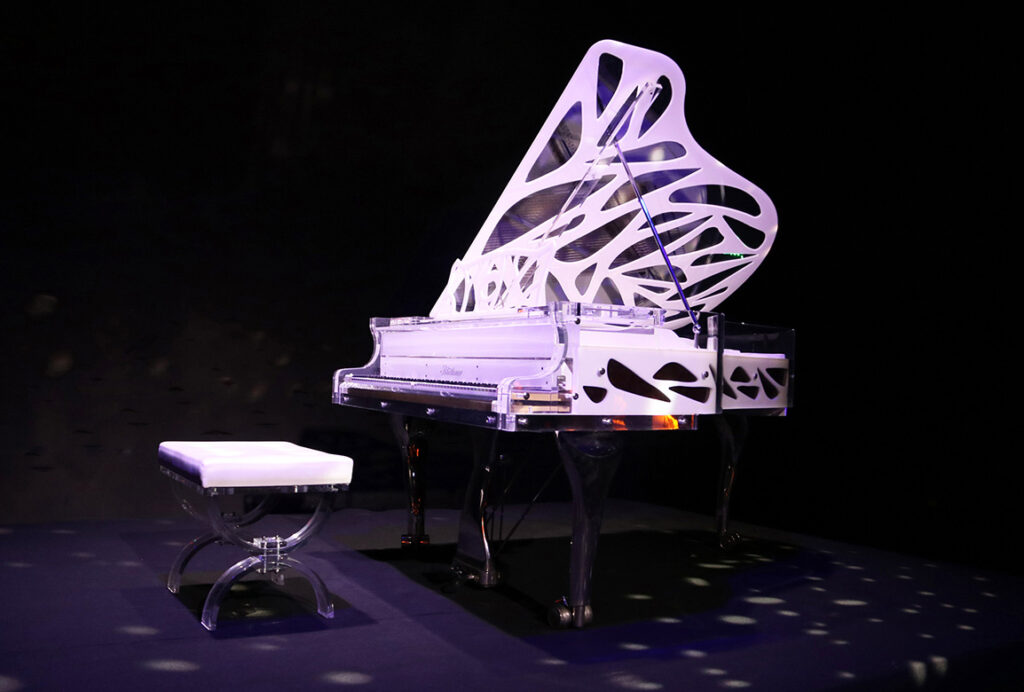
Few musical instruments offer the same relationship with light as the Blüthner Crystal piano.
Where a traditional grand piano presents a solid, polished form, the Crystal Edition introduces transparency, reflection, and the opportunity for integrated illumination. Its appearance can shift with the changing daylight or become a dramatic focal point within a carefully composed evening setting.
For interior designers and architects, this presents a unique creative opportunity: an instrument whose visual character can become part of a home’s lighting design.
Light as a Design Element
In sophisticated interiors, lighting does far more than provide visibility.
A carefully designed lighting scheme establishes visual hierarchy, guides the eye, and determines how individual furnishings and architectural features are experienced.
Consider a sculptural staircase washed in soft light, a marble wall gently illuminated to reveal its veining, or a work of art presented beneath precisely directed gallery lighting.
Each responds to light differently.
The Blüthner Crystal piano offers another dimension: transparency.
Light passes through portions of the instrument’s casework while reflecting from its polished surfaces, metallic components, and carefully finished internal structure.
This interplay creates an appearance that is both substantial and remarkably open.
Rather than treating the piano as an object to be illuminated after the room is complete, designers can consider it as part of the original lighting concept.
DESIGN PERSPECTIVE
Light reveals form. Transparency allows form and light to become part of the same composition.
Designing with Natural Daylight
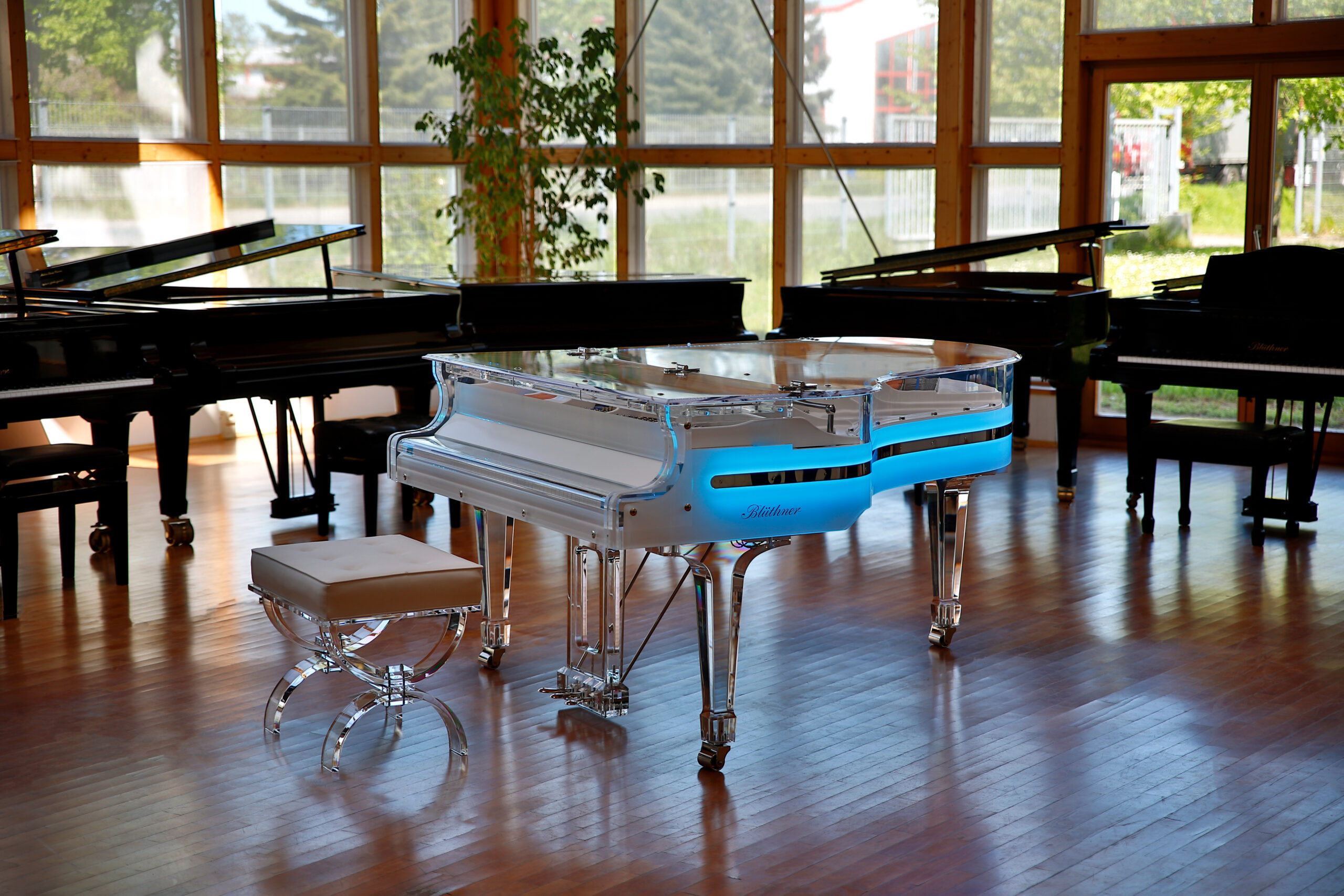
One of the most captivating qualities of a transparent piano is the way its appearance changes throughout the day.
Under soft morning light, the instrument may appear delicate and understated. As ambient light grows stronger, reflections and internal details become more pronounced.
In the late afternoon, warmer light can introduce a softer visual character.
For designers working with expansive windows and open architectural spaces, the effect can be especially compelling.
Controlling light rather than maximizing it
An important distinction exists between designing with daylight and exposing a fine piano to direct sunlight.
All acoustic pianos benefit from a stable environment. Prolonged direct sunlight, heat buildup, and fluctuations in humidity should be avoided.
The more sophisticated approach is to use controlled ambient daylight.
Architectural elements such as recessed window openings, sheer drapery, UV-filtering glazing, and adjustable shading can help create a luminous interior without subjecting the instrument to excessive exposure.
The objective is a softly illuminated environment that celebrates transparency while respecting the instrument.
The Transformation After Dark
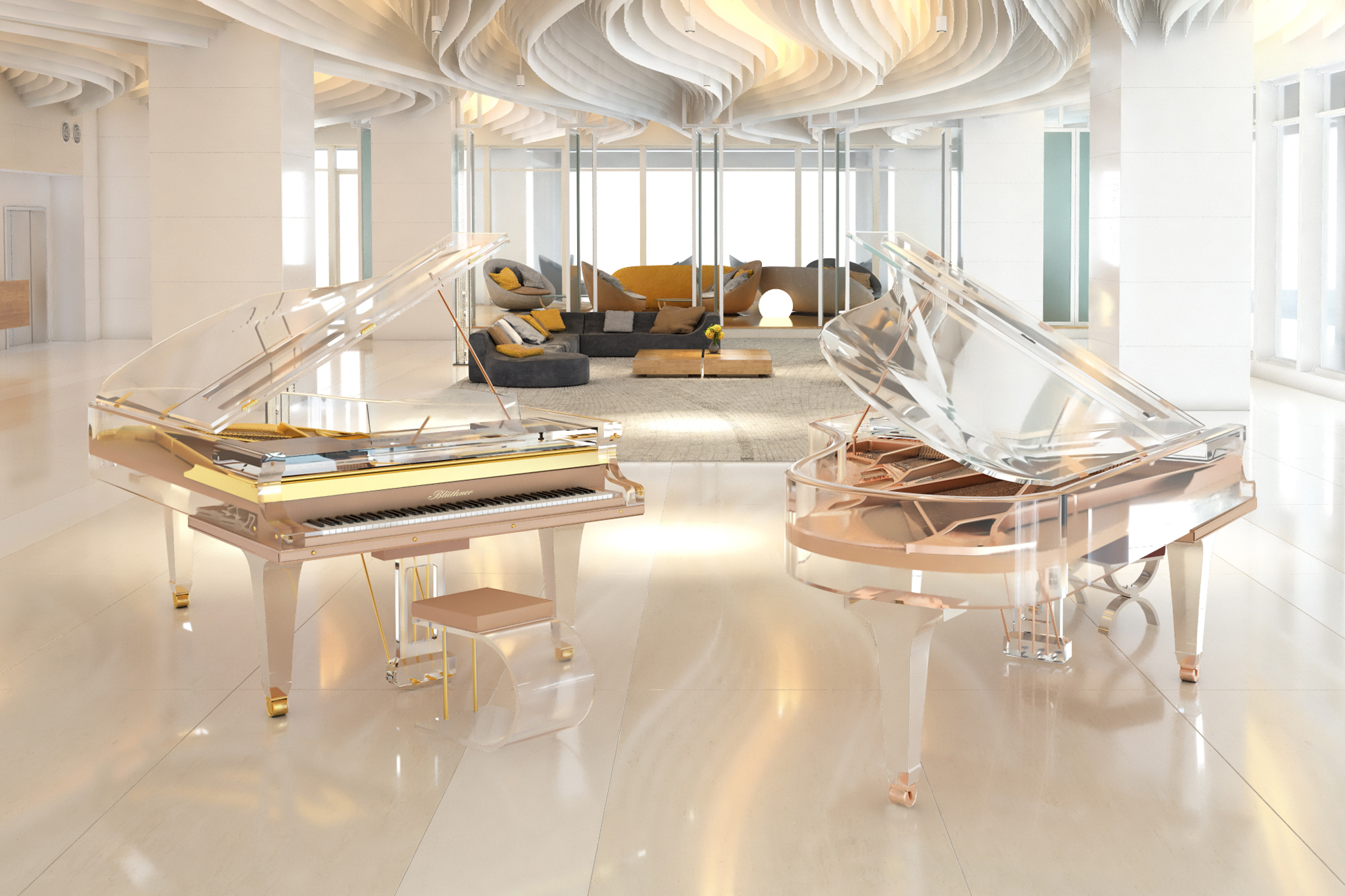
Perhaps the most intriguing opportunity for lighting designers is how the Crystal piano can change the atmosphere of a room after sunset.
During daylight hours, the instrument may appear almost weightless within its surroundings.
As the interior transitions into evening, a carefully composed lighting scheme can bring greater emphasis to the piano’s sculptural form.
The result need not be dramatic in the theatrical sense.
In fact, understated illumination often produces the most elegant result.
Consider a luxury residence designed for entertaining.
During the day, the piano remains a beautiful but visually restrained architectural feature.
In the evening, low-level ambient lighting and subtle highlights introduce a more intimate atmosphere. The piano becomes a point of visual interest without overwhelming the surrounding design.
The instrument has not changed.
The experience of it has.
Integrated LED Illumination: Light Within the Instrument
Architectural lighting illuminates the piano from its surroundings.
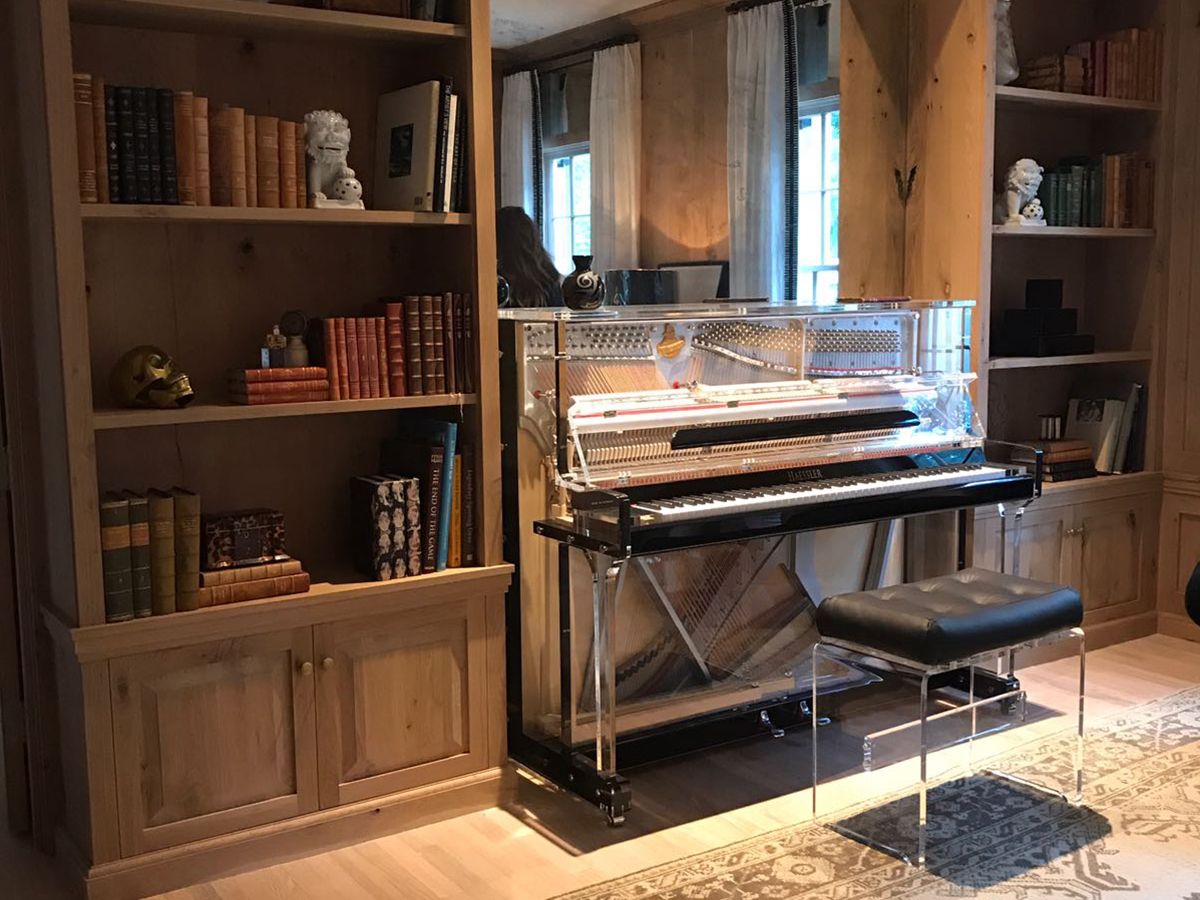
The Blüthner Crystal Edition offers a further possibility: light incorporated into the instrument itself.
Selected Crystal configurations may include integrated LED illumination, introducing another level of visual expression.
Rather than relying exclusively on external fixtures, the lighting becomes an element of the piano’s bespoke design.
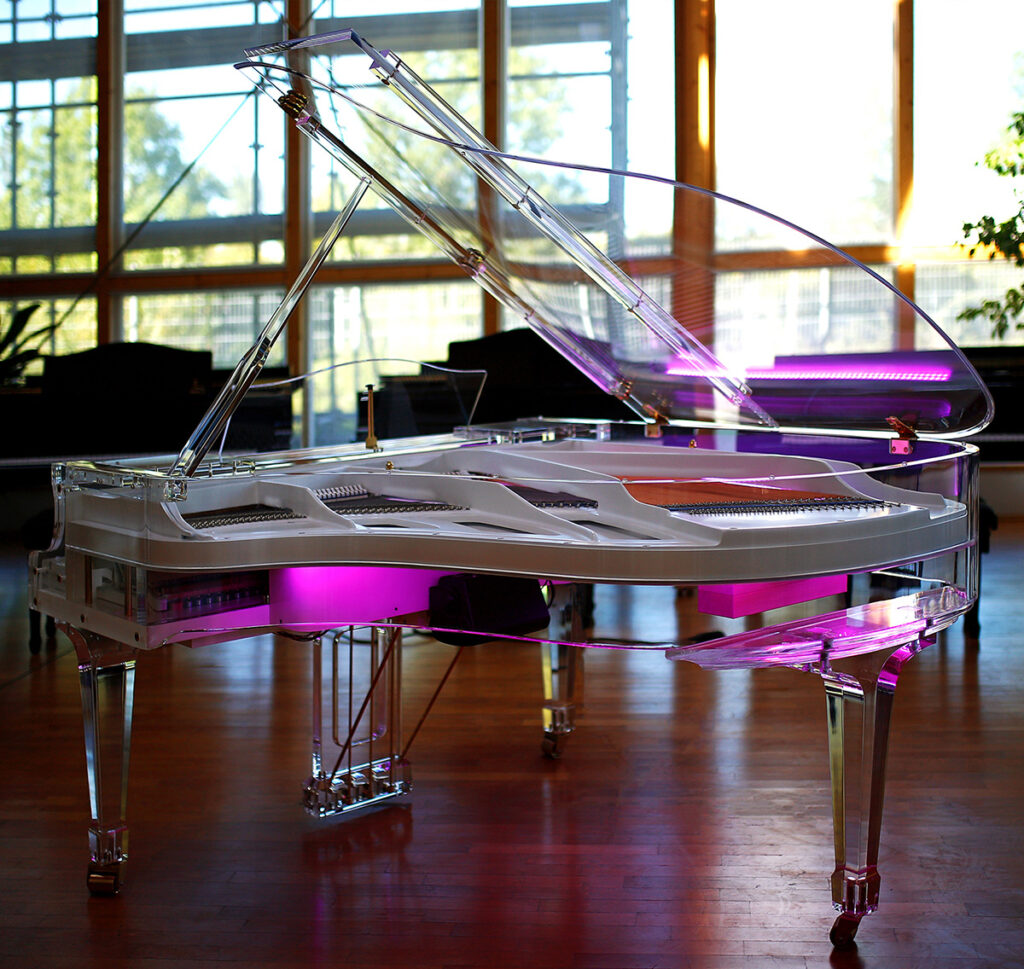
On the Crystal Elegance, for example, strategically positioned LEDs may illuminate the inner rim, adding definition to the instrument’s transparent structure.
This offers several aesthetic possibilities.
A soft architectural glow
Subtle illumination can emphasize the shape of the piano without making the lighting itself the dominant feature.
Highlighting internal details
Carefully positioned light can draw attention to the visible craftsmanship and internal structure, depending on the model and lighting configuration.
A distinctive evening focal point
Within a subdued interior, integrated illumination can create an elegant focal point, particularly in entertaining spaces, private residences, and luxury hospitality environments.
These effects should be considered during the bespoke specification process so that the final design works cohesively with the broader interior lighting plan.
DESIGN PERSPECTIVE
The most effective lighting does not compete with the object. It allows the object’s beauty to become more apparent.
Three Lighting Approaches for Luxury Interiors
While each project requires its own lighting plan, three design approaches are particularly worth exploring with a Crystal piano.
1. The Gallery Approach
In a minimalist residence or private art gallery, the objective may be to present the instrument as a sculptural work.
A restrained ambient lighting scheme, supported by carefully positioned architectural fixtures, allows the piano’s form to remain the visual focus.
This approach works particularly well in spaces where furnishings and decorative elements have been intentionally minimized.
The designer should be mindful of glare and distracting reflections, particularly where polished flooring and expansive glazing are present.
2. The Residential Approach
In a luxury living room, the priority may be warmth and intimacy rather than visual drama.
Layered lighting creates a more inviting atmosphere.
Soft indirect illumination, decorative fixtures, and controlled accent lighting can allow the Crystal piano to sit comfortably among furnishings and architectural finishes.
Here, the objective is balance.
The piano should feel like an intentional part of the residence rather than an exhibition piece separated from everyday life.
3. The Evening Entertaining Approach
For a private entertainment space or luxury hospitality setting, lighting can help establish a sense of occasion.
Low-level ambient lighting can be combined with select Crystal models featuring integrated LEDs.
This creates the opportunity for the instrument to become a more expressive presence after dark, while still functioning as a genuine acoustic grand piano.
A well-designed lighting scheme should remain comfortable for the pianist, guests, and anyone seated nearby.
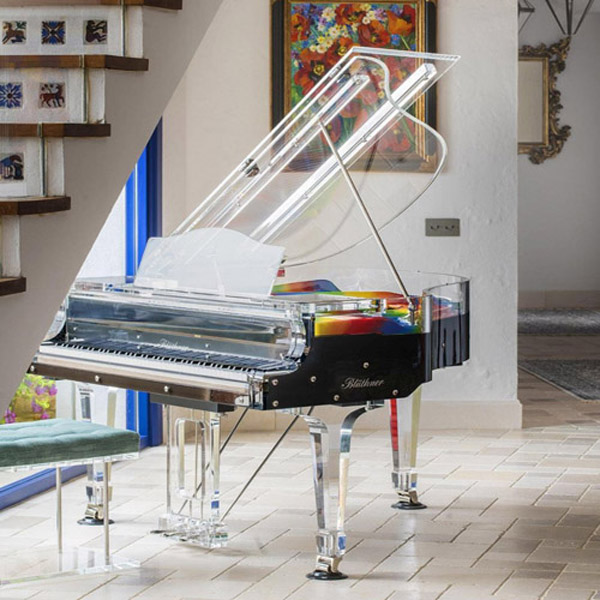
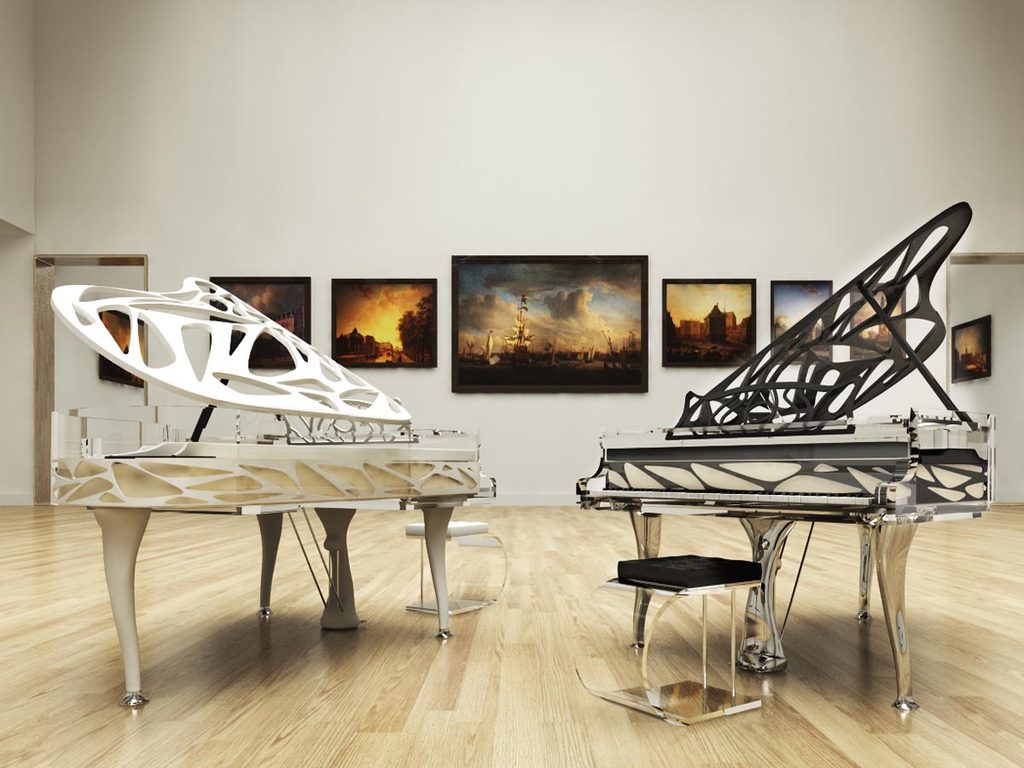
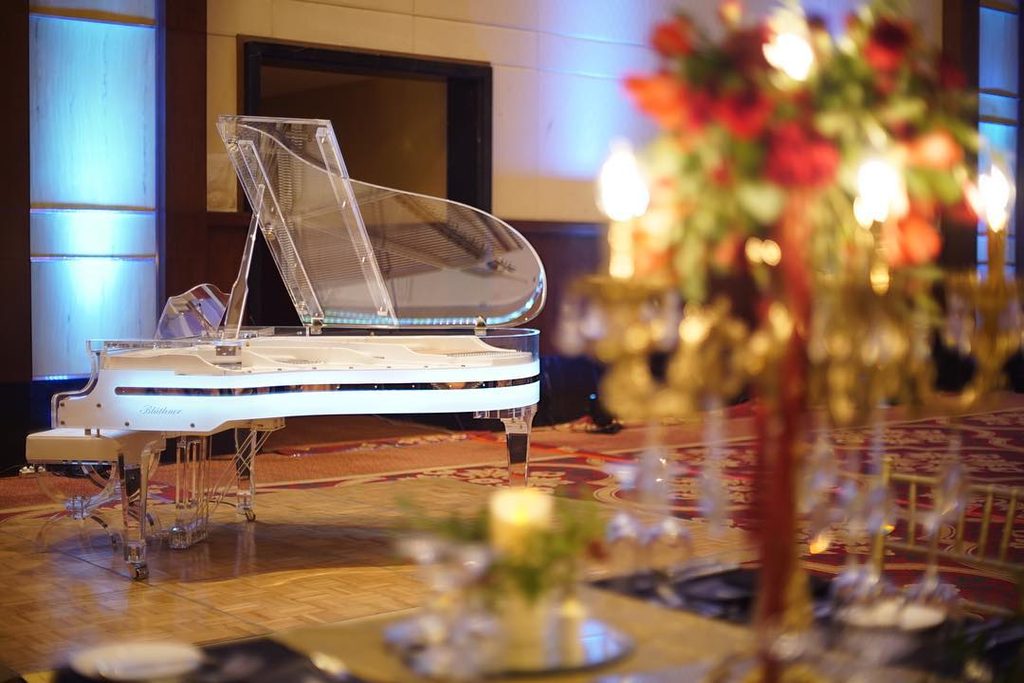
Gallery, residential, and evening entertaining environments offer different opportunities for presenting the Blüthner Crystal through light.
The Details That Make the Difference
When incorporating a Crystal piano into an architectural lighting scheme, several details deserve particular attention.
Reflections and glare
Transparent and polished surfaces respond to both the placement and intensity of surrounding light sources.
A fixture that looks beautiful elsewhere in the room may create an unwanted reflection when viewed through or across the piano.
Evaluating the instrument from important sightlines can help identify these concerns early.
Color temperature
Warm and cool lighting can create very different impressions of the same instrument.
Warm ambient light may complement intimate residential settings, while carefully controlled neutral lighting can suit more contemporary or gallery-inspired environments.
The appropriate choice depends on the surrounding finishes, the lighting concept, and the desired mood.
Dimming and flexibility
A room may need to accommodate quiet evenings, social gatherings, and live musical performance.
Dimmable architectural lighting allows the environment to respond to these different uses.
Any integrated piano illumination should be coordinated with the selected factory options and operating requirements rather than assumed to function as part of an existing lighting-control system.
Visibility for the pianist
An illuminated piano must remain practical to play.
Decorative lighting should not produce distracting reflections across the keyboard or interfere with the visibility of sheet music.
Where the piano will be used regularly, appropriate task lighting should be considered alongside the decorative lighting scheme.
These small decisions contribute to an installation that is as functional as it is visually refined.
When Light Becomes Part of the Experience
One of the more compelling aspects of the Blüthner Crystal is that it invites the viewer to experience a familiar object differently.
The shape of the grand piano remains recognizable, yet the transparency and illumination reveal unexpected visual relationships.
From one angle, the instrument may appear delicate and open.
From another, its curved silhouette and internal framework become more prominent.
Under evening illumination, the same instrument can take on an entirely different character.
For the luxury interior designer, these changing impressions offer possibilities that extend beyond the selection of furniture, finishes, or decorative objects.
They allow an instrument to participate in the atmosphere of a space.
And when the piano is played, the visual experience is joined by something even more meaningful: music.
Bespoke Lighting and the Blüthner Crystal Edition
The Blüthner Crystal Edition is created for clients who appreciate exceptional craftsmanship and individual expression.
Each piano is made to order in Leipzig, Germany, with opportunities for personalization that vary by model and selected configuration.
For designers considering integrated illumination, the most effective approach is to explore the possibilities during the initial design process.
At Luxe Piano Editions, we collaborate with interior designers, architects, luxury builders, and private clients to coordinate bespoke Blüthner instruments for distinctive environments.
Our role is to help translate the design vision into an appropriate piano specification while working with the factory on available options.
Whether the objective is a subtly illuminated instrument or a striking centerpiece for evening entertaining, the goal remains the same:
A piano that belongs within the architecture while offering an extraordinary musical experience.
EXPLORE THE BLÜTHNER CRYSTAL COLLECTION
Frequently Asked Questions
Can a Blüthner Crystal piano have built-in lighting?
Yes. Selected Blüthner Crystal models offer optional integrated LED illumination. Specific configurations and availability should be reviewed during the bespoke design process.
Can integrated lighting be added to any Crystal piano?
Lighting options vary by model and configuration. The best approach is to discuss the desired effect with Luxe Piano Editions before the instrument is commissioned.
Does a transparent piano need special architectural lighting?
Not necessarily. A Crystal piano can be beautiful under conventional ambient lighting. However, thoughtful architectural lighting can emphasize its transparency, contours, and internal structure.
What lighting works best around a Crystal piano?
Soft, controlled ambient lighting is often an excellent starting point. Carefully positioned accent lighting may help define its form, while minimizing glare and unwanted reflections.
Can a Crystal piano be placed near floor-to-ceiling windows?
Yes, but direct sunlight, heat exposure, and environmental fluctuations should be carefully managed. Window treatments and stable interior conditions can help protect the instrument.
Will integrated illumination interfere with playing the piano?
An appropriately planned lighting scheme should preserve a comfortable playing experience. Keyboard visibility, potential glare, and the needs of the pianist should be considered as part of the overall lighting design.
Can Luxe Piano Editions collaborate with an interior designer or lighting consultant?
Yes. Luxe Piano Editions works with design professionals and private clients to explore Crystal models, finishes, available lighting options, and factory customization for individual projects.
Where Light, Design, and Music Meet
The Blüthner Crystal piano is remarkable not simply because of its transparent design, but because of the creative opportunities that transparency provides.
In the hands of a thoughtful designer, light becomes another element through which the instrument can be experienced.
Subtle during the day. Expressive in the evening. Always unmistakably a grand piano.
At Luxe Piano Editions, we welcome the opportunity to collaborate on projects where exceptional design and musical craftsmanship are equally valued.
Considering a Blüthner Crystal piano for your next project?
We invite interior designers, architects, and private clients to explore the possibilities of a bespoke instrument.
INQUIRE ABOUT A BESPOKE CRYSTAL PIANO
Luxe Piano Editions
A Division of Reeder Pianos, Inc.
www.luxepianos.com
info@luxepianos.com